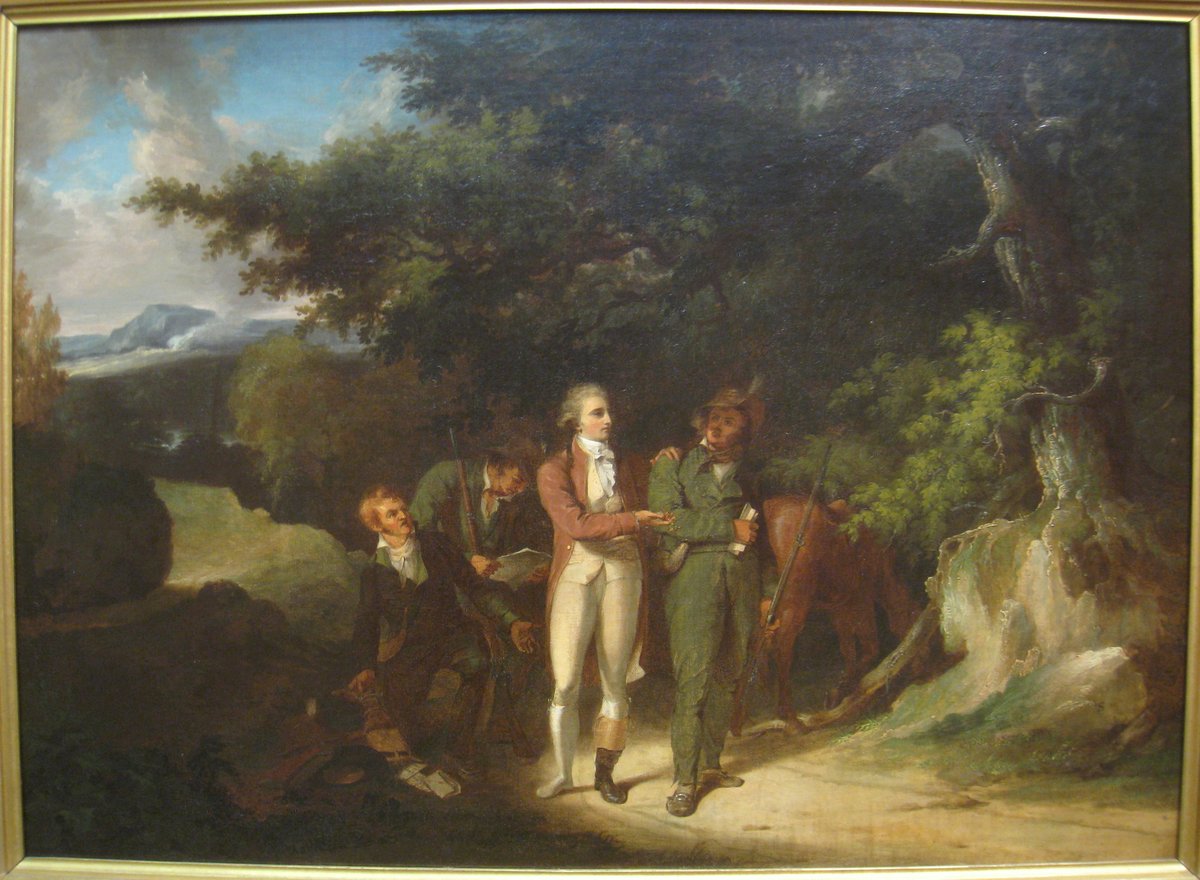
*How a band of Croton locals forced the HMS Vulture downstream — and accidentally exposed Benedict Arnold's treason*
On the evening of September 21, 1780, the British sloop-of-war HMS Vulture rode at anchor in the Hudson River just below Teller's Point — the southernmost tip of the peninsula the Kitchawank had called Navish, and which Dutch and English settlers knew as Croton Point. The Vulture had been in the river for days, her presence a source of unease to the American militia watching from the Westchester shore. No one on the American side knew why she was there.
She was waiting for Major John Andre.
The Secret Meeting
Andre was the head of British intelligence — young, handsome, accomplished, and charged with the most important covert operation of the war. He had come to negotiate with Benedict Arnold, the American general commanding West Point, the linchpin fortress of the Hudson Highlands. Arnold, bitter over perceived slights from Congress and drowning in personal debts, had offered to surrender West Point and its garrison to the British for 20,000 pounds.
The meeting had to happen in person. On the night of September 21, a boat with muffled oars crossed the dark river. Frederic Shonnard, in his 1900 *History of Westchester County*, reconstructed the scene: "Near midnight, Smith, in the boat thus obtained, rowed by two of his tenants, Joseph and Samuel Colquhoun, with muffled oars, proceeded on ebb tide to the 'Vulture' and brought Andre on shore, where he found Arnold awaiting him in the darkness among the fir trees at a lonely unfrequented spot at the foot of the Long Clove Mountain south of Haverstraw village."
Andre came ashore wearing his British officer's uniform beneath a blue greatcoat. He and Arnold talked through the night at the home of Joshua Hett Smith on the west bank, haggling over the price of treason. Arnold handed over detailed plans of West Point's fortifications, troop dispositions, and the locations of artillery — enough information to allow a British assault to take the fortress with minimal losses. The fall of West Point would have severed New England from the rest of the colonies and potentially ended the American Revolution.
The plan was simple: Andre would return to the Vulture at dawn, carrying the plans downriver to British-held New York. Arnold would remain at West Point, ready to weaken its defenses when the British fleet arrived.
The Shot from Teller's Point
But as dawn broke on September 22, the men and women living along the east bank of the Hudson near Croton Point had plans of their own.
The Vulture's presence had been reported to Colonel James Livingston, commander of the American garrison at Verplanck's Point, just north of Croton. The local militia — farmers, fishermen, and tradesmen who knew every inch of the shoreline — asked Livingston for a cannon. Robert Bolton, in his 1848 *History of the County of Westchester*, describes what happened next:
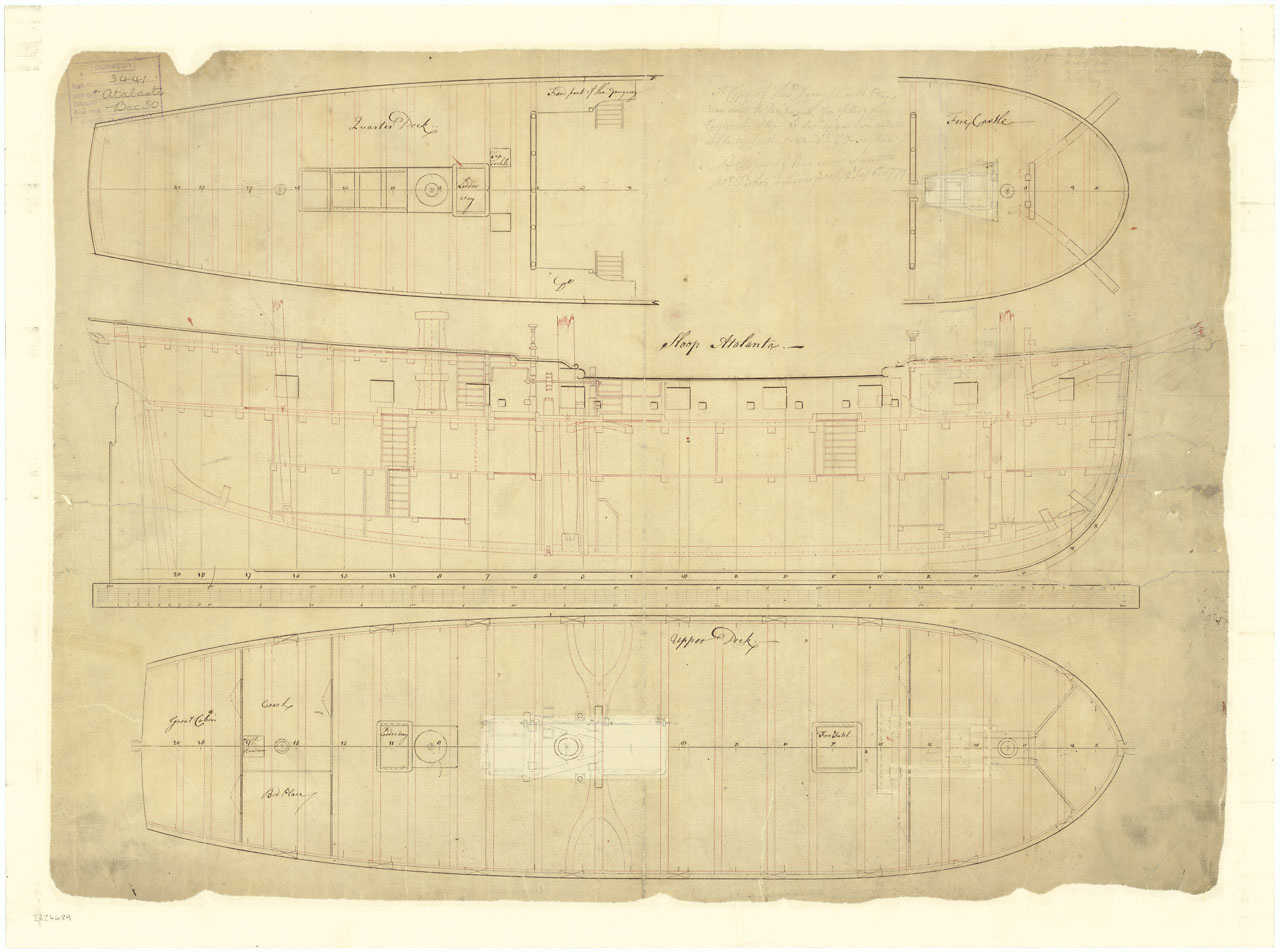
"Many of them now hastened to the scene of action with a field piece, which they had obtained of Col. Livingston, who was in command at Verplanck's Point; and after erecting their little battery on the Point, they opened a well-directed fire against the Vulture. They soon compelled her to slip her cable and hoist sail."
J. Thomas Scharf's 1886 account adds crucial details. Before the cannon arrived, two men — George Sherwood and John Peterson, "the latter a colored man" — had already fired on a boat from the Vulture that was approaching Teller's Point. Scharf records that Peterson and Sherwood "concealed themselves behind the large rocks which still lie on the beach" and opened fire as the boat swept toward shore. "His aim had been well directed," Bolton wrote of Peterson's shot, "for an oar was seen to fall from the hands of one of the men on board, and much confusion was observed among them."
The militia's cannon fire was more devastating. Shonnard records that "the Americans fired with effect, shivering some of the spars of the vessel, and compelled her to weigh anchor and drop down the river." One cannonball lodged in an oak tree on the shore, where it remained for more than half a century. When the tree finally decayed and was cut down, Shonnard notes, the ball was removed and "presented by William Underhill to George J. Fisher, M.D., of Sing Sing" — a small artifact connecting the Underhill family of Croton Point vineyards fame to the most dramatic moment of the Revolution in Westchester.
Andre Watches His Escape Disappear
From an upper window of Smith's house on the opposite bank, Andre watched the engagement unfold. Benson Lossing, traveling the Hudson in the 1850s to research his history of the river, wrote that "on the twenty-second of September, 1780, Major Andre saw the war-ship Vulture drop down the river to escape a galling fire from Teller's Point. Fresh from his interview with Arnold, the British spy was anxious to return to New York by the only safe way — the way by which he had come. His uneasiness at the departure of the Vulture from her anchorage may be imagined."
Andre's uneasiness was justified. With the Vulture gone, he was stranded on the wrong side of enemy lines. Smith refused to row him back to the ship. The only option was to travel overland through Westchester — thirty miles of contested territory controlled by irregular militia, bandits, and "cowboys" loyal to neither side.
Arnold gave Andre a pass identifying him as "Mr. John Anderson" on public business, and Andre changed out of his uniform into civilian clothes — a fateful decision that would, under the laws of war, make him a spy rather than a prisoner of war if captured. He hid the plans of West Point in his stockings.
The Capture
On September 23, near Tarrytown, three young militiamen — John Paulding, David Williams, and Isaac Van Wart — stopped a man in civilian clothes who seemed nervous. They searched him and found the plans. Andre, thinking they were Loyalists, had blurted out that he was a British officer before realizing his mistake. He offered them his gold watch and any sum of money. They refused.
Arnold learned of Andre's capture just hours before Washington arrived at West Point for an inspection. He fled down the Hudson in a barge to the Vulture — the very ship the Croton militia had driven away — and escaped to British lines. Andre was tried by a military tribunal, convicted of espionage, and hanged at Tappan on October 2, 1780.
The Argument Shonnard Made
The standard telling of this story focuses on the three men at Tarrytown — whose names adorn a Westchester County parkway to this day. But Frederic Shonnard, writing in 1900, made a claim that has been largely overlooked by popular historians:
"The great enterprise shown by the Americans on the Westchester shore in bringing a cannon down from Verplanck's Point and firing on the 'Vulture' from Teller's (Croton) Point probably had quite as much to do with the ultimate capture of Andre and salvation of America as any other circumstance, not excepting the formal arrest by Paulding, Williams, and Van Wart."
Shonnard's logic is straightforward. If the Vulture had remained at anchor, Andre would have rowed back to the ship at dawn on September 22 — a trip of perhaps twenty minutes across calm water. He would have arrived in New York with the plans of West Point by nightfall. Arnold's treason would have succeeded. The fortress that controlled the Hudson would have fallen to the British, severing the colonies in two.
Instead, a handful of unnamed Croton locals — farmers and militia who had no idea what they were preventing — hauled a borrowed cannon to the tip of a peninsula where the Kitchawank had once built their fortress, aimed it at one of the most powerful warships in the British fleet, and changed the course of the war.
The identities of most of these militia members are lost to history. Bolton identifies only the two initial sharpshooters — Sherwood and the "colored man" Peterson — and notes that Colonel Livingston lent the field piece. Scharf preserves the detail that the cannonade came from the old Indian fortification site. The cannon fired from the same ground where, 135 years earlier, the Kitchawank had signed the 1645 peace treaty that ended Kieft's War.
The Vulture's captain, unwilling to risk his ship in the narrow channel under artillery fire, weighed anchor and retreated south. In doing so, he sealed Andre's fate — and preserved the American Revolution.
Sources Consulted
- Bolton, Robert Jr. *A History of the County of Westchester*, Vol. I (1848), chunks 1442, 1443, 1491, 1605
- Shonnard, Frederic & W.W. Spooner. *History of Westchester County* (1900), chunks 4950, 4951, 4952, 4953, 4963, 4964
- Scharf, J. Thomas. *History of Westchester County* (1886), chunks 3757, 3762, 4016, 4018
- Lossing, Benson. *The Hudson River from Ocean to Source* (1866), chunk 288
All direct quotes are verbatim from the cited sources. Each factual claim was verified against the Croton Historical Archive database.