*For a dozen years, the quiet commuter village on the Hudson was a node in an international smuggling network — and a stage for some of Prohibition's most improbable scenes*
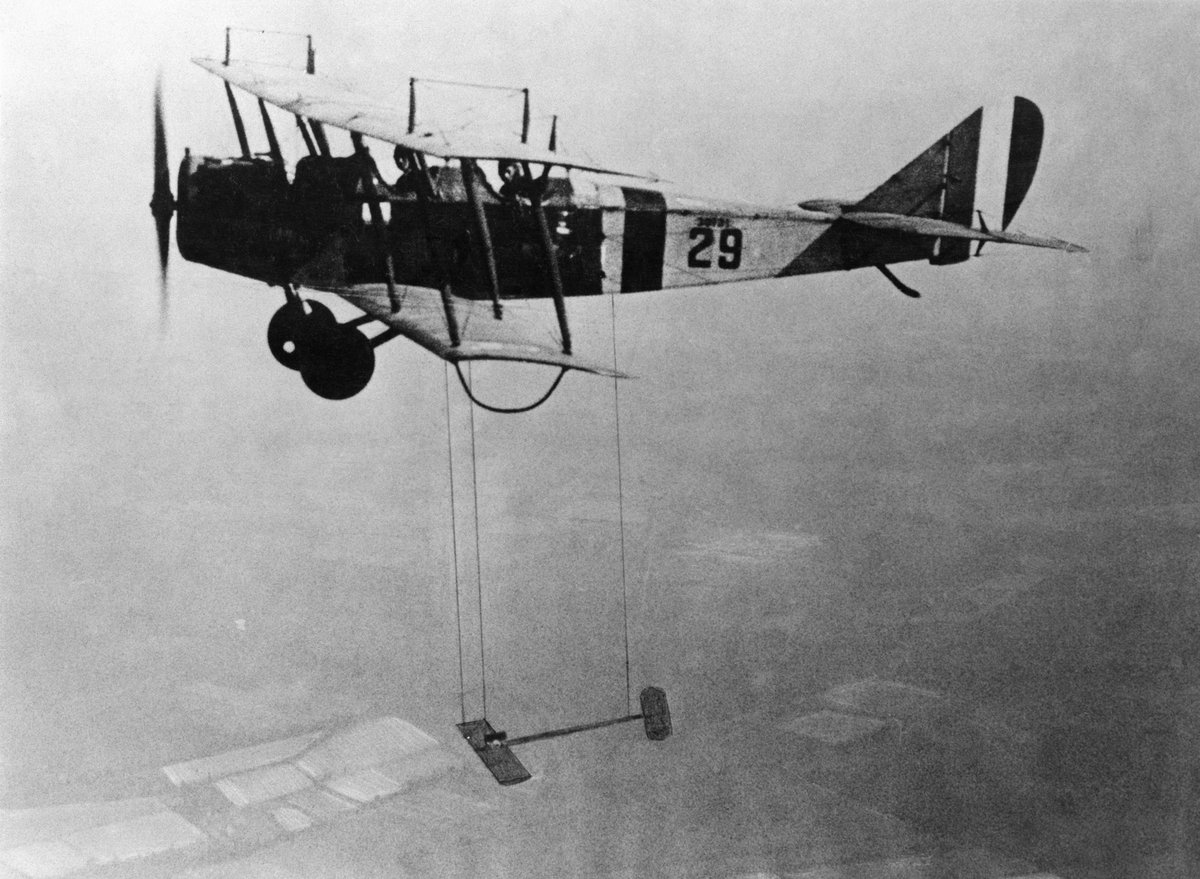
On the evening of May 15, 1922, a Curtis biplane circled low over farmland near Croton-on-Hudson. The pilot was looking for a place to land in near-total darkness. Below him, the Albany Post Road wound through the Hudson Valley hills, and somewhere along it sat the Tumble Inn — a roadhouse that had recently attracted the attention of federal Prohibition agents. The pilot circled repeatedly, misjudged the terrain, and came down hard on a hillside owned by former Westchester County deputy sheriff George McCall, "approximately a mile above Croton and a quarter-mile from the Tumble Inn" (chunk 959, crotonhistory.org).
McCall rushed to the wreckage. He detected the distinctive odor of whiskey amid the smell of gasoline and oil. "Rather than finding a dead pilot, he discovered 'a wrathful and limping man' who quickly departed in a waiting automobile before police arrived" (chunk 959).
State troopers from White Plains found the rear cockpit packed with burlap sacks containing "approximately 250 quarts of Scotch and Irish whiskey, all bearing Quebec liquor commission tax stamps" (chunk 959). At bootleg prices of roughly $15 per bottle — against a Canadian purchase price of $3 — the cargo was worth approximately $3,750.
But it was the navigation chart that told the larger story. "A worn navigation chart found in the wreckage revealed the pilot's intended route. The map traced a path from Montreal to Glens Falls, New York, then followed the Hudson River to Croton, where it forked into two branches: one running toward Briarcliff and Connecticut, and another extending south toward Manhattan" (chunk 959). The chart described not a single flight but a route — an aerial smuggling corridor that had been used before and was meant to be used again.
Then there were the personal effects: "a vanity box, powder puff and several articles of feminine attire" in the cockpit, sparking speculation about a female pilot (chunk 959). And most mysteriously, "a mysterious figure in a naval aviator's uniform reportedly arrived at the crash scene shortly after the plane went down, calling out to the pilot by name" before both men disappeared into the night (chunk 959).
The *New York Times* headline the next day captured the scene: "LIQUOR LADEN PLANE FROM CANADA FALLS AS IT NEARS CITY / Drops 250 Quarts of Scotch Near Croton, Where Water for Highballs Comes From" (chunk 810, crotonhistory.org). The subheading was a wink at the Croton Aqueduct — the system that delivered drinking water to New York City from the very valley where bootleg whiskey was now falling from the sky.
The Submarines
If the rum plane represented smuggling by air, a 1924 discovery suggested the Hudson itself was being used as an underwater corridor. "A 1924 aerial photograph taken by a Manhattan map-making firm" captured two dark shapes in the water near Croton Point — "each approximately 250 feet long and 600 feet apart" (chunk 910, crotonhistory.org).
The photograph was forwarded to the Navy, which "confirmed having no submarines in the area" (chunk 910). It was then passed to Coast Guard Intelligence and filed away. Ellen NicKenzie Lawson, in her book *Smugglers, Bootleggers and Scofflaws: Prohibition and New York City*, documented the image and placed it in context. Elsewhere in the book, Lawson recorded court testimony of a smuggler who had witnessed "a submarine appearing on Rum Row with a German captain and a French crew" (chunk 910). Whether the Croton Point shapes were submarines, optical artifacts, or something else entirely has never been resolved.
The Motorist's Playground
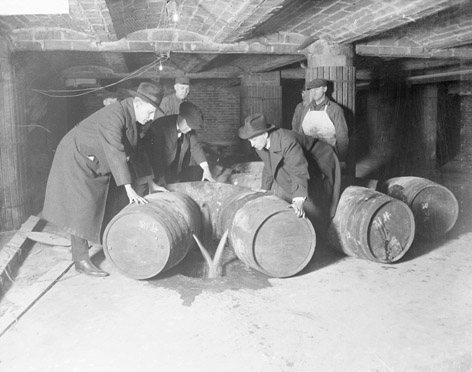
The air and the river were smuggling corridors. The roadhouses along the Albany Post Road were the retail outlets.
In the early 1920s, the stretch of road through the Croton area was marketed as part of "Westchester County, the Motorist's Playground, 900 Miles of Good Roads" (chunk 840, crotonhistory.org). A 1921 *New-York Tribune* advertisement listed three Croton "road houses" in a single promotion. The automobile had opened the countryside to New Yorkers looking for weekend entertainment — and the Volstead Act had ensured that entertainment would involve illegal alcohol.
Three establishments formed the core of Croton's speakeasy geography. The Tumble Inn, "situated at the location now occupied by Skyview," operated as both a legitimate roadhouse and a speakeasy (chunk 804, crotonhistory.org). A 1919 postcard showed its backyard, and "Aunt Ella" wrote on the back: "Wish you were with us. $7.50 per day for my room and $10.00 for the other two at 'Tumble Inn' . . . best in the country" (chunk 804). It was the Tumble Inn's proximity to the rum plane crash that made federal agents suspicious of a connection.
The Nikko Inn, at 80 Nordica Drive in Harmon, was "alternatively known as 'The Japanese Tea House'" — built in 1907 by developer Clifford B. Harmon "as part of a plan to bring professional theater and film stars from New York City" (chunk 804, crotonhistory.org). During Prohibition it became a speakeasy under the management of Roy Kojima.
Across the street, the Mikado Inn was built circa 1920 by "Admiral" George T. Moto — "a former employee of Clifford Harmon" who, "following a disagreement, purchased land across from the Nikko Inn — which he had previously managed — and built the competing Mikado" (chunk 922, crotonhistory.org). The rivalry between the two Japanese-themed roadhouses, operated by former colleagues, gave the Harmon intersection a character unlike anything else in Westchester.
The Undercover Fiddlers
The federal government's response to Croton's speakeasy culture was to send agents undercover — and the resulting operations had the quality of comic theater.
At the Nikko Inn, three agents embedded themselves in the evening's entertainment. The *New York Times* of June 17, 1922 reported: "McKay fiddled, Reager sang and Gallante danced" (chunk 853, crotonhistory.org). After the proprietor, Charles Hase, "served them alcohol at $1.50 per drink, they arrested him and waiter Hero Gotow for violating the Volstead Act. Both individuals received $1,000 bail" (chunk 853).
Roy Kojima, who took over the Nikko Inn, was eventually padlocked by federal judge John C. Knox in May 1925. Years later, journalist Karl Kingsley Kitchen visited and documented Kojima's startling claim: "he asserted he had authored the popular song 'The Million-Dollar Baby' years earlier" (chunk 852, crotonhistory.org). Kitchen observed that while the central concept — meeting someone in a five-and-ten-cent store — paralleled the published song, Kojima's original poem differed enough to leave the question unresolved.
The Teenage Pianist in the Cellar
At the rival Mikado Inn, the entertainment was genuine — if unconventional. In 1922, a sixteen-year-old pianist named Oscar Levant began performing there. In his 1965 memoir *The Memoirs of an Amnesiac*, Levant recalled the arrangement: he "played the piano in a Japanese roadhouse" while sharing living quarters "with approximately twenty or thirty Japanese waiters in the cellar" (chunk 861, crotonhistory.org).
"The proprietor, nicknamed 'Admiral Moto,' was a jovial Japanese man overshadowed by his imposing Irish wife described as 'tall, dictatorial and quite respectable.' The kitchen was managed by a 20-year-old Italian chef from nearby Croton, trained in Japanese sukiyaki preparation" (chunk 861). The Mikado Inn was a place where Japanese, Irish, Italian, and teenage Jewish pianists all coexisted in a ramshackle establishment that served $5 Porterhouse steaks and illegal whiskey to motorists from the city.
Admiral Moto himself had already made legal history. In 1921, he was "acquitted in what newspapers called 'the first case to be tried in Westchester County for alleged violation of the New York State liquor law'" (chunk 922). The acquittal set the tone: local juries had little appetite for enforcing a law the community regarded as an intrusion.
Levant would become one of America's most celebrated musicians and wits — concert pianist, actor, author, television personality. But his career began in the basement of a Croton roadhouse, sleeping on a cot next to Japanese waiters, playing for tips at a speakeasy whose owner had already beaten a liquor charge.
The Longer Pattern
The Prohibition stories are irresistible on their own terms — rum planes, possible submarines, undercover fiddlers, teenaged pianists. But they also fit a pattern that stretches back centuries. J. Thomas Scharf, in his 1886 *History of Westchester County*, charged Frederick Philipse — the colonial manor lord whose vast estate dominated the county — with "complicity with piracy, smuggling and the slave trade" (Scharf 1886, chunk 3660). Philipse ran rum from Madagascar and traded with pirates on the same stretch of the Hudson where, 250 years later, Curtis biplanes would crash-land with Canadian whiskey.
The geography explains the continuity. The Hudson River has always been a corridor between Canada and New York, and the Croton area — with its sheltered cove, its proximity to both the river and the overland roads, its distance from the city but accessibility to it — has always been a natural waypoint for anyone moving goods that authority did not want moved. The Kitchawank traded on this river. The Dutch smuggled on it. The cowboys and skinners of the Revolution plundered along it. And the bootleggers of the 1920s, with their biplanes and their submarines and their fiddling federal agents, were simply the latest in a long line of people who understood that the fastest way between Montreal and Manhattan ran right through Croton.
Sources Consulted
- "The Mystery of the Rum Plane," crotonhistory.org (chunk 959)
- "Another Mystery of the Rum Plane," crotonhistory.org (chunk 810)
- "Rum-Running Submarines off Croton Point," crotonhistory.org (chunk 910)
- Lawson, Ellen NicKenzie. *Smugglers, Bootleggers and Scofflaws* (2013)
- "Our Multi-Talented Federal Prohibition Agents," crotonhistory.org (chunk 853)
- "Roy Kojima, Busted and Boastful," crotonhistory.org (chunk 852)
- "Nikko Inn, Harmon, N.Y.," crotonhistory.org (chunk 804)
- "The Motorist's Playground," crotonhistory.org (chunk 840)
- "Oscar Levant Plays the Mikado," crotonhistory.org (chunk 861)
- "Mikado Inn Real Photo Postcard," crotonhistory.org (chunk 922)
- "Tumble Inn," crotonhistory.org (chunk 804)
- Scharf, J. Thomas. *History of Westchester County* (1886), chunk 3660
- *New York Times*, June 17, 1922
All direct quotes are verbatim from the cited sources. Each factual claim was verified against the Croton Historical Archive database.