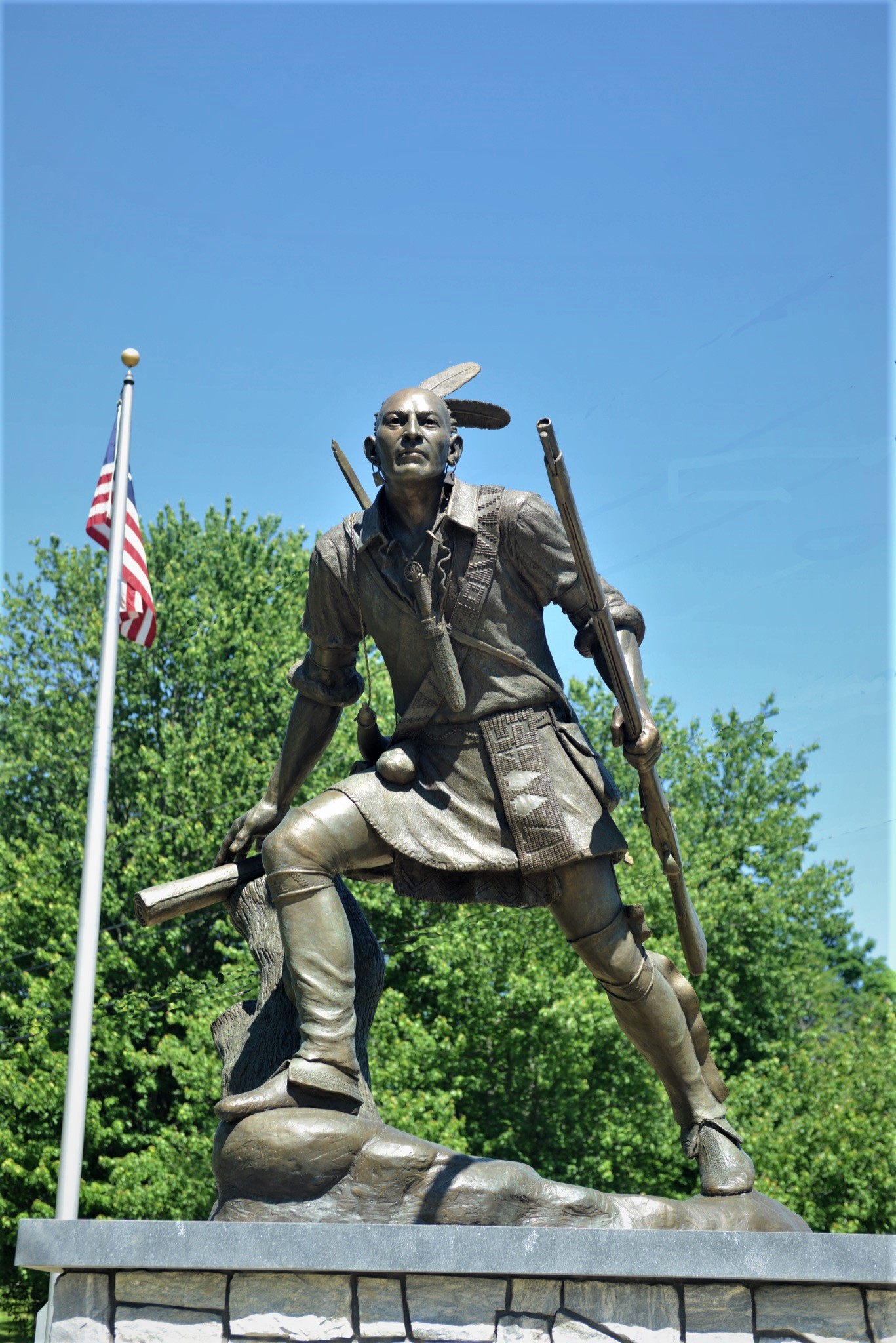
*The last Wappinger sachem fought a land fraud in London, served under Washington at Valley Forge, and died telling his warriors to flee while he stayed behind*
By 1750, the Wappinger nation was a shadow of what it had been. European contact, disease, and the catastrophic wars of the seventeenth century had reduced a people who once numbered in the thousands to perhaps a few hundred scattered survivors. They lived as nomads across the borderlands of five colonies — New York, Connecticut, Massachusetts, New Jersey, and Pennsylvania — surviving through basket weaving, broom crafting, and seasonal farm labor. They had no land of their own.
Their leader was Daniel Nimham, born around 1726. His father, known as "One Shake" or Cornelius Nimham, had likely taught him English. The boy received further education at the Stockbridge Mission in Massachusetts during the 1740s — a Christian settlement where the remnants of several Algonquian bands had gathered. By the time he assumed the role of sachem, Nimham was described as "the most prominent Native American of his time in the lower Hudson Valley."
He led a band of 200 to 300 people — Mahicans and Munsee speakers, the remains of what had once been a confederation of 18 bands stretching from Manhattan to Connecticut. Despite his people's poverty, Nimham maintained one ritual: annual pilgrimages to Mount Nimham in Putnam County, where he could survey the landscape and see the lands he believed still belonged to the Wappinger.
The Land Fraud
The story of those lands begins in 1697, when a merchant named Adolph Philipse obtained a royal patent for territory in what is now Dutchess and Putnam counties. The original grant covered roughly 15,000 acres. But Peter Cutul, in a 2025 research paper for the Hudson Highlands Land Trust, describes what happened next: Philipse "cut down the tree marking the eastern border, rode all day and remarked a tree near the CT border" — expanding his claim by approximately 190,000 acres in a single stroke.
The fraud was breathtaking in its simplicity. A colonial governor, Fletcher, issued a new patent the very next day after Philipse's purchase — "Adolph's cozy relationship with the governor more than likely facilitated the transaction," Cutul writes. The eastern boundary of the Philipse Patent, originally 15,000 acres of river-bottom land, now stretched all the way to the Connecticut border. The Wappinger, who had never sold the interior lands, found themselves legally dispossessed of 205,000 acres.
For generations, no one with standing challenged the patent. Then, in 1765, Daniel Nimham filed suit.
The Trial
Nimham argued before a New York court that the Wappinger had been "defrauded of their lands." His legal advisor was a man named Samuel Munroe. The case seemed strong — the discrepancy between the original deed and the expanded patent was documented. But the court was dominated by manor lords with their own land patents to protect. They rejected Nimham's claim. Worse, they arrested Munroe.
The London Mission
Undeterred, Nimham assembled a delegation. In 1766, he traveled to London with three Mohican chiefs — Jacob Cheeksaunkun, John Naunauphtaunk, and Solomon Uhhaunauwaunmut — and their wives. The journey was financed by sympathetic colonial rent rioters who saw the Wappinger case as a test of whether any property rights in the colonies rested on legitimate foundations.
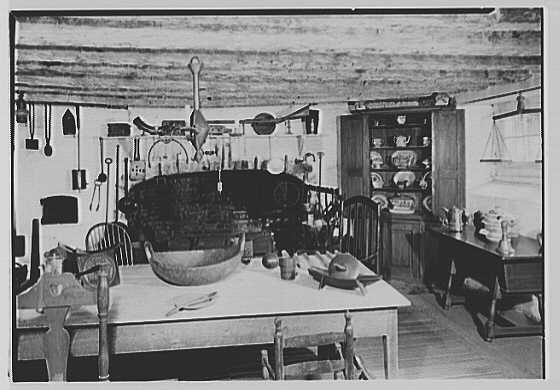
The delegation caused a sensation in London. The *London Chronicle* described one of the chiefs as "six and a half feet without shoes...dressed in the Indian manner." Nimham addressed members of Parliament. The Lords of Trade, reviewing the case, acknowledged "sufficient cause to investigate frauds and abuses" of Indian lands. The Wappinger case appeared to be gaining traction.
Then came the second hearing, before Governor Sir Henry Moore. Cutul's paper, drawing on the primary documents, reconstructs the courtroom scene with devastating specificity: "In an 11th hour surprise, Beverly Robinson reached into his coat pocket and produced a deed dated August 13, 1702 which included language covering the whole 205,000 acre parcel and extended the Eastern border all the way to CT."
Nimham's attorney Munroe examined the document. He "was about to point out some mark of Fraud attending it," Cutul writes, when "one of the Gentlemen of Council took the Same from him, and turning himself to the President said he was perfectly satisfied."
The deed was snatched from the attorney's hands before he could prove it was fraudulent. The case was closed. Robinson's attorney argued that returning land would set a dangerous precedent — an argument that carried the day because every manor lord in the colony had something to lose.
Nimham returned to America empty-handed. The Wappinger would never recover their lands.
The Revolution
When the American Revolution broke out, Nimham and his son Abraham chose a side. Abraham, born in 1745, became captain of Indian scouts in the Continental Army, commanding the Stockbridge Militia — a confederacy of Mohicans, Wappingers, Munsee, and remnants of other shattered Algonquian bands. The father-son pair served under George Washington at Valley Forge during the terrible winter of 1777-78, and later with the Marquis de Lafayette.
It was a bitter irony. Nimham was fighting for a nation founded on the principle that unjust governance justified rebellion — the same nation whose courts had stolen his people's land. But the British offered nothing better, and Nimham's commitment to the American cause appears to have been genuine.
The Battle of Kingsbridge
On August 31, 1778, fifty Stockbridge Militia warriors were scouting in what is now the Bronx when they encountered the Queen's Rangers — a Loyalist cavalry unit commanded by Lieutenant Colonel John Graves Simcoe, one of the most effective British partisan leaders of the war.
The engagement occurred in present-day Van Cortlandt Park — on land that had once been part of the Van Cortlandt Manor, built on territory purchased from the Kitchawank, the Wappinger band that had occupied Croton Point.
Robert Bolton, in his 1848 *History of Westchester County*, recorded the final moments of Daniel Nimham with a specificity that suggests he drew from eyewitness accounts or Simcoe's own memoirs:
"When Nimham saw the grenadiers close in his rear, he called out to his people to fly, 'that he himself was old, and would die there;' he wounded Lieut. Col. Simcoe, and was killed by Wright, his orderly Hussar."
Edward Manning Ruttenber, in his 1872 study of the Hudson River tribes, adds: "The Indians fought most gallantly; they pulled more than one of the cavalry from their horses."
Nimham was approximately 52 years old. Bolton records that "near forty of the Indians were killed, or desperately wounded; among others, Nimham, a chieftain, who had been in England, and his son." Abraham Nimham died alongside his father.
Bolton preserves the aftermath in haunting detail. The site of the battle in the Van Cortlandt woods "still goes by the name of Indian field. Here the dead were buried." The surviving warriors fled down a ridge "to what is called Indian bridge; which then, as now, crossed Tippetts brook. On gaining the western bank, they secreted themselves amid the rocks and bushes." The cavalry pursued but could not scale the rocks. They "called upon the fugitives to surrender; promising them as a condition for so doing, life and protection. Upon this, three ventured to throw themselves upon the mercy of the British."
The Legacy
After Nimham's death, Hendrick Aupaumut and surviving tribal members petitioned Massachusetts for aid, noting that widows and children now lacked hunters to "provide for their families" and struggled to obtain "coarse cloathing particularly Blankets."
The surviving Wappinger eventually merged with the Mohicans and Munsee in Stockbridge, Massachusetts. In the nineteenth century, they were relocated to New York's Oneida County, then again to Wisconsin. Today the Stockbridge-Munsee Nation holds a reservation in Shawano County, Wisconsin — 800 miles from the Croton River that the Kitchawank had called Kitchewan, "the rushing water."
Memorials to Nimham have multiplied over the centuries. In 1906, the Daughters of the American Revolution dedicated a monument at Van Cortlandt Park. New York State erected historical markers in Kent and Fishkill. Nimham Mountain (1,260 feet) and Lake Nimham in Putnam County bear his name. An annual Daniel Nimham Intertribal Pow Wow is held in Putnam County. In 2022, an eight-foot bronze statue by sculptor Michael Keropian was dedicated in Fishkill — depicting the sachem who had traveled to London to argue for justice, fought at Valley Forge for a nation that had wronged his people, and died on a field in the Bronx telling his warriors to save themselves while he made his last stand.
Sources Consulted
- Cutul, Peter. "Land Heist in the Highlands" (2025), chunks 5392, 5393, 5394
- Bolton, Robert Jr. *History of the County of Westchester*, Vol. II (1848), chunks 1758, 1759
- Ruttenber, E.M. *History of the Indian Tribes of Hudson's River* (1872), chunk 3553
- Wikipedia, "Daniel Nimham" (chunk 5391)
All direct quotes are verbatim from the cited sources. Each factual claim was verified against the Croton Historical Archive database.