*The New Croton Dam was an engineering triumph. The settlement that built it was a story of exploitation, debt bondage, and a rough community in the Westchester hills that vanished almost without a trace.*
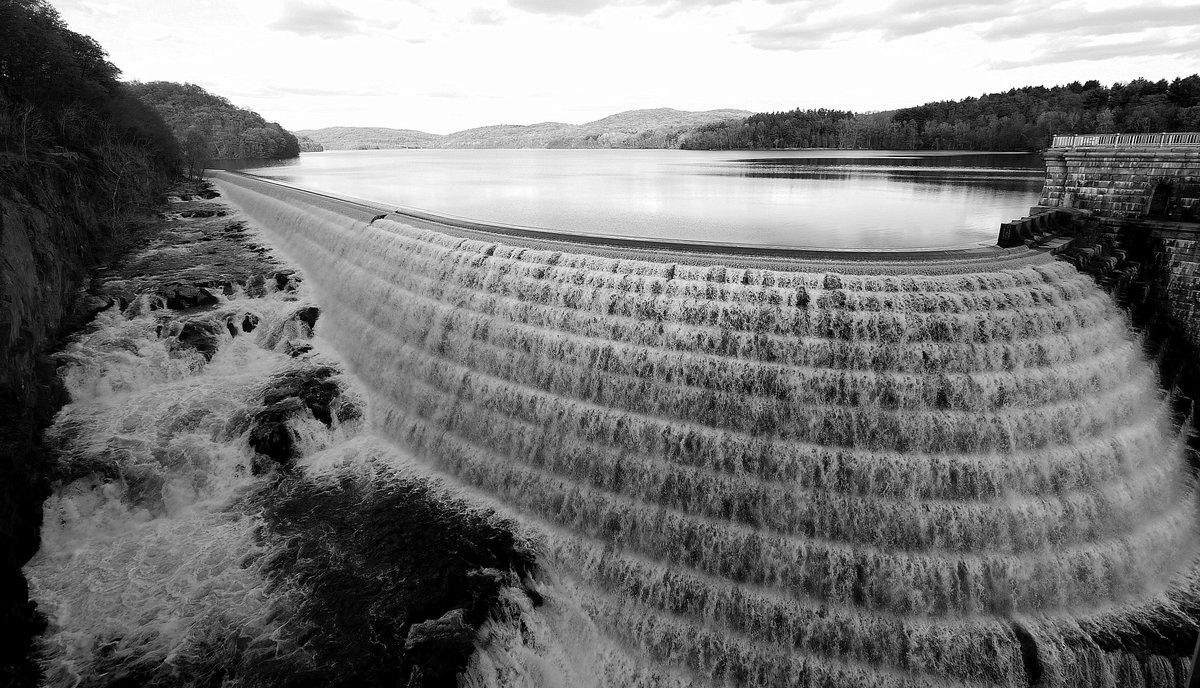
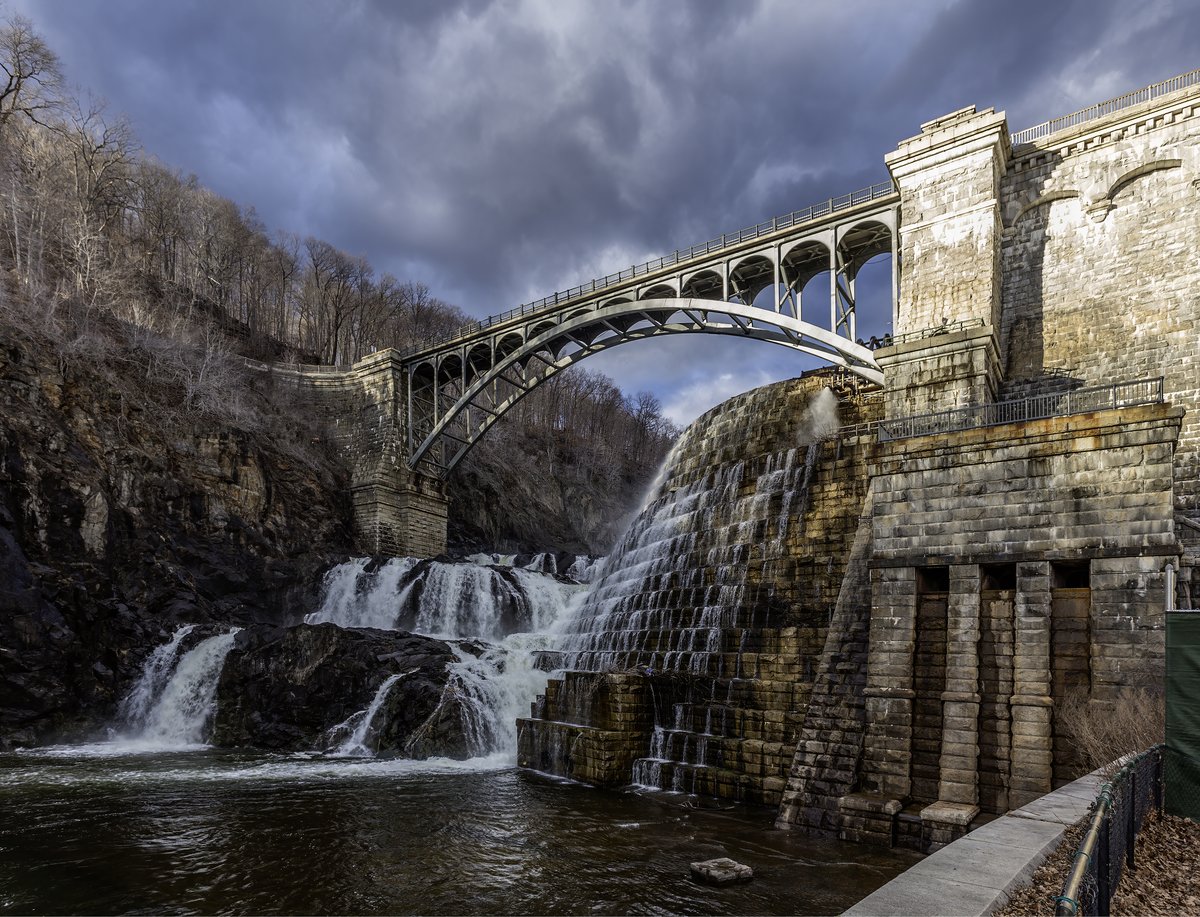
Between 1892 and 1906, hundreds of immigrant laborers carved a colossal wall of stone across the Croton River gorge. When they finished, the New Croton Dam stood 297 feet high — at completion, it ranked as "the world's tallest masonry dam" (chunk 975, crotonhistory.org). Its S-shaped spillway became a standard reference in hydraulic engineering, known internationally as the "Croton Profile" (chunk 975). An architectural review in 1907 described it as "very much a cleanly articulated, sculptured object in the landscape" (chunk 975).
The dam is a monument to engineering ambition. But the settlement that grew up around its construction site — a place its residents called "the Bowery, or Little Italy" — tells a story the monument does not.
The Padrone System
The workers came from southern Italy, recruited and controlled by *padrones* — Italian labor bosses who operated as middlemen between the immigrants and the dam's contractors. The padrone system was efficient and ruthless.
"These English-speaking supervisors hired men in large groups, charged substantial commissions, and advanced passage money from Italy. They sold provisions at inflated prices and deducted percentages from wages. Each padrone managed up to 150 workers, providing board and lodging while workers remained perpetually in debt through monthly payment structures" (chunk 975, crotonhistory.org).
The arithmetic was designed so that the worker could never get ahead. He arrived in America owing the padrone for his passage. His wages were garnished for commission. His food came from the padrone's store at inflated prices. His bed in the dormitory was deducted from his pay. Each month he fell further behind, his labor siphoned away through a dozen small fees and markups. It was a system of debt bondage that operated in full daylight.
The Settlement
"A settlement called the Bowery, or Little Italy, emerged approximately one mile from the dam along the Croton River's banks. It contained worker housing in two-story structures, grocery stores, saloons, a chapel, and a schoolhouse" (chunk 975). The settlement was a self-contained world — isolated from the surrounding Westchester communities, organized around the rhythms of the construction site.
"Housing consisted mainly of dormitory-style rooming houses with long tables and wooden benches accommodating 60 workers, with sleeping areas featuring canvas cots in large rooms. Some workers' wives established lodging houses, providing meals, mending, and laundry services to earn additional income" (chunk 975).
Oral history preserves the atmosphere with blunt clarity. One local resident recalled: "It was a rough area. Fellas would get a few drinks, you couldn't tell what the dickens they would do" (chunk 975).
The Wage Hierarchy
The construction site maintained a racial and ethnic hierarchy written into the pay scale. "Workers classified as 'intelligent labor' earned 30 cents daily more than 'common labor,' yet the common category subdivided into white, colored, and Italian classifications, with Italians receiving the lowest compensation" (chunk 975). The Italian workers — the men doing the heaviest and most dangerous work — were paid less than any other group on the site.
The danger was constant. "An Italian saying reflected this: 'A man lost his life for every stone set on the dam'" (chunk 975). Whether the saying was literally true or a grim exaggeration, it captured the workers' understanding of their own expendability.
The Strike and Governor Roosevelt
In April 1900, "New York State mandated an 8-hour workday for public works projects. Organized laborers subsequently demanded higher wages and improved conditions. When contractors refused, workers struck and threatened sabotage" (chunk 975).
The response was swift and overwhelming. "Governor Theodore Roosevelt dispatched the Seventh Regiment, establishing Camp Roosevelt around the project. After three weeks of negotiations, the strike ended without substantial improvements" (chunk 975). The future president sent troops to protect a dam project rather than enforce the labor law that had triggered the dispute. The workers went back to twelve-hour days.
The Irish Parallel
The Italian workers of the New Croton Dam were not the first immigrants to build waterworks in the Croton Valley under brutal conditions. More than half a century earlier, in 1838, Irish laborers constructing the Old Croton Aqueduct had staged their own strike. They demanded wages of 87.5 to 100 cents per day and marched from the Croton Dam site to Sing Sing in a show of collective defiance (Old Croton Aqueduct records, chunk 696).
The parallel is stark: the same valley, the same work, the same pattern of imported labor, exploitation, and resistance — separated by sixty years and a change of nationality. The Irish built the aqueduct in the 1830s and 1840s; the Italians built the dam in the 1890s and 1900s. Both groups were the most recently arrived and most vulnerable workers in America, and both were used to build the infrastructure that sustained New York City's growth.
The Ceremony and the Vanishing
"The final dam stone, weighing 3,200 pounds, was ceremonially placed on January 10, 1906. New York City Comptroller Herman Metz accepted the structure on behalf of the city, casting an Irish shamrock beneath the stone alongside guests' coins. Workers activated steam-powered machinery to lower the stone, followed by champagne breaking and reservoir filling" (chunk 975).
The dam extended "1,168 feet across the valley with a 1,000-foot spillway. Foundation depth measured 131 feet below the riverbed, with total height reaching 297 feet, base thickness of 206 feet, and top thickness of 18 feet" (chunk 975). Upon completion, the reservoir formed a great lake extending nearly twenty miles upstream, submerging the original Old Croton Dam beneath thirty-three feet of water.
The settlement vanished almost as quickly as it had appeared. "Most single workers departed after 1907 to pursue other construction and railway employment, though several hundred families remained to establish new Croton neighborhoods" (chunk 975). The dormitories were torn down. The saloons shuttered. The chapel was abandoned.
Today, the New Croton Dam stands as a testament to engineering ambition, admired for its dramatic spillway and its massive stone face. But there is no marker for the Bowery, no monument to the padrone system, no plaque for the workers who built the dam while trapped in cycles of debt. An Italian proverb about a man's life for every stone is all that remains of their Little Italy on the Croton.
Sources Consulted
- "Water Over the Dam," Croton Friends of History (chunk 975) — padrone system, settlement, wage hierarchy, strike, ceremony
- Old Croton Aqueduct historical records (chunk 696) — 1838 Irish workers' strike
- Wikipedia, "New Croton Dam" — engineering specifications
All direct quotes are verbatim from the cited sources. Each factual claim was verified against the Croton Historical Archive database.