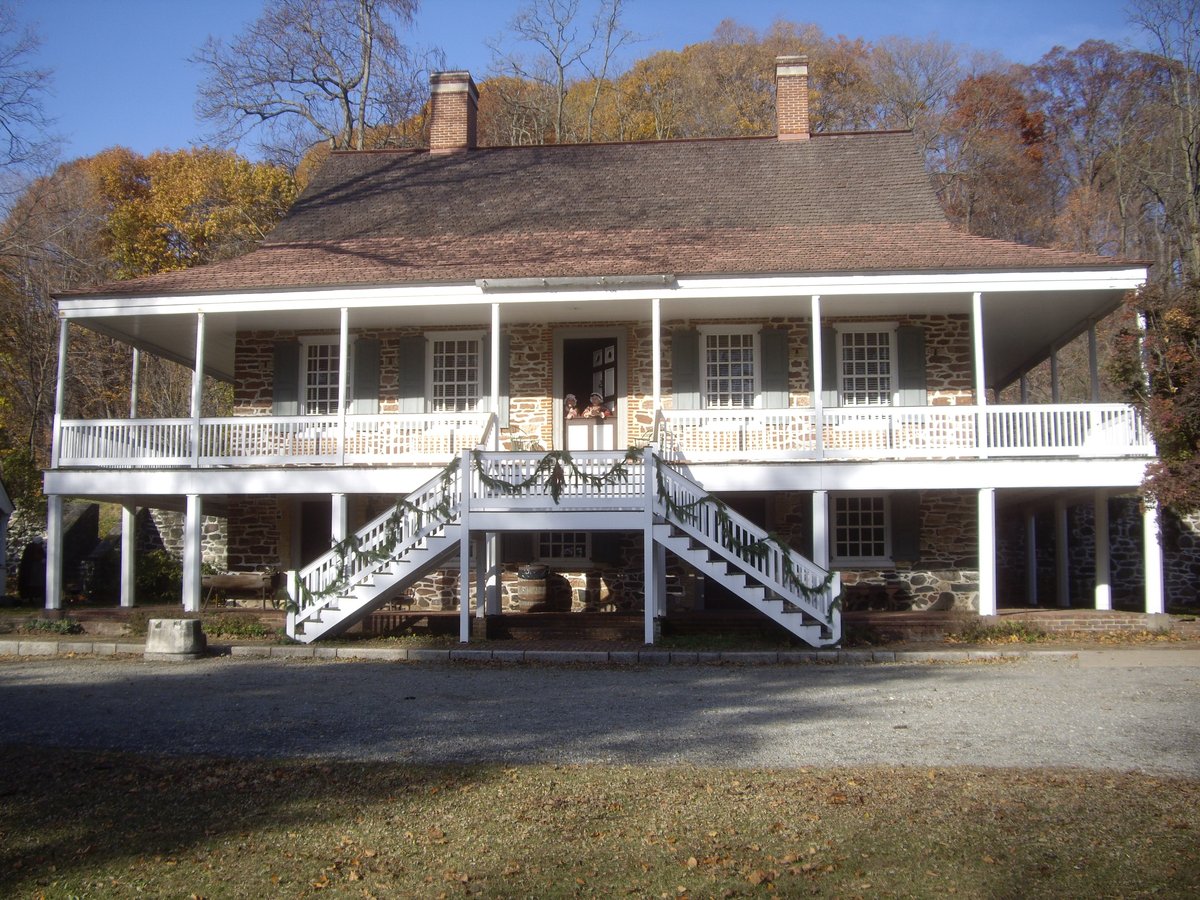
*The Van Cortlandt family hosted Washington, Lafayette, and Rochambeau — while holding both Native Americans and Africans in bondage. A will and a deed tell the story the museum doesn't.*
Van Cortlandt Manor sits along the Croton River near its confluence with the Hudson, a handsome stone house surrounded by gardens that today operates as a museum of colonial life. During the American Revolution, the manor served as a gathering place for the patriot cause. George Washington passed through its doors. The Marquis de Lafayette and the Comte de Rochambeau visited. It is remembered as a house of liberty.
But the documentary record — preserved in Robert Bolton's 1848 *History of the County of Westchester* — tells a more complicated story.
"My Indians or Muster Slaves"
Bolton transcribed the will of a Van Cortlandt family member that contains language of startling specificity. The testator directed: "Item, I will and direct, that Matty and Sarah, my Indians or muster slaves, shall be manumitted and set at full freedom" (Bolton 1848, chunk 1551).
The phrasing is remarkable on multiple levels. "Indians or muster slaves" acknowledges that Matty and Sarah were Native Americans held in bondage — not indentured servants, not war captives in temporary custody, but slaves whom the testator possessed the legal power to free. The will distributed the remainder of the estate among relatives, including "my brother Jacobus van Cortlandt" and the children of "my deceased sister, Marietje van Renssalear" (Bolton 1848, chunk 1551) — confirming this was a prominent member of one of the colony's leading families.
The act of manumission, while it freed two individuals, simultaneously confirmed the system that had enslaved them. You cannot free someone you do not own.
"Robin, My Indian Slave"
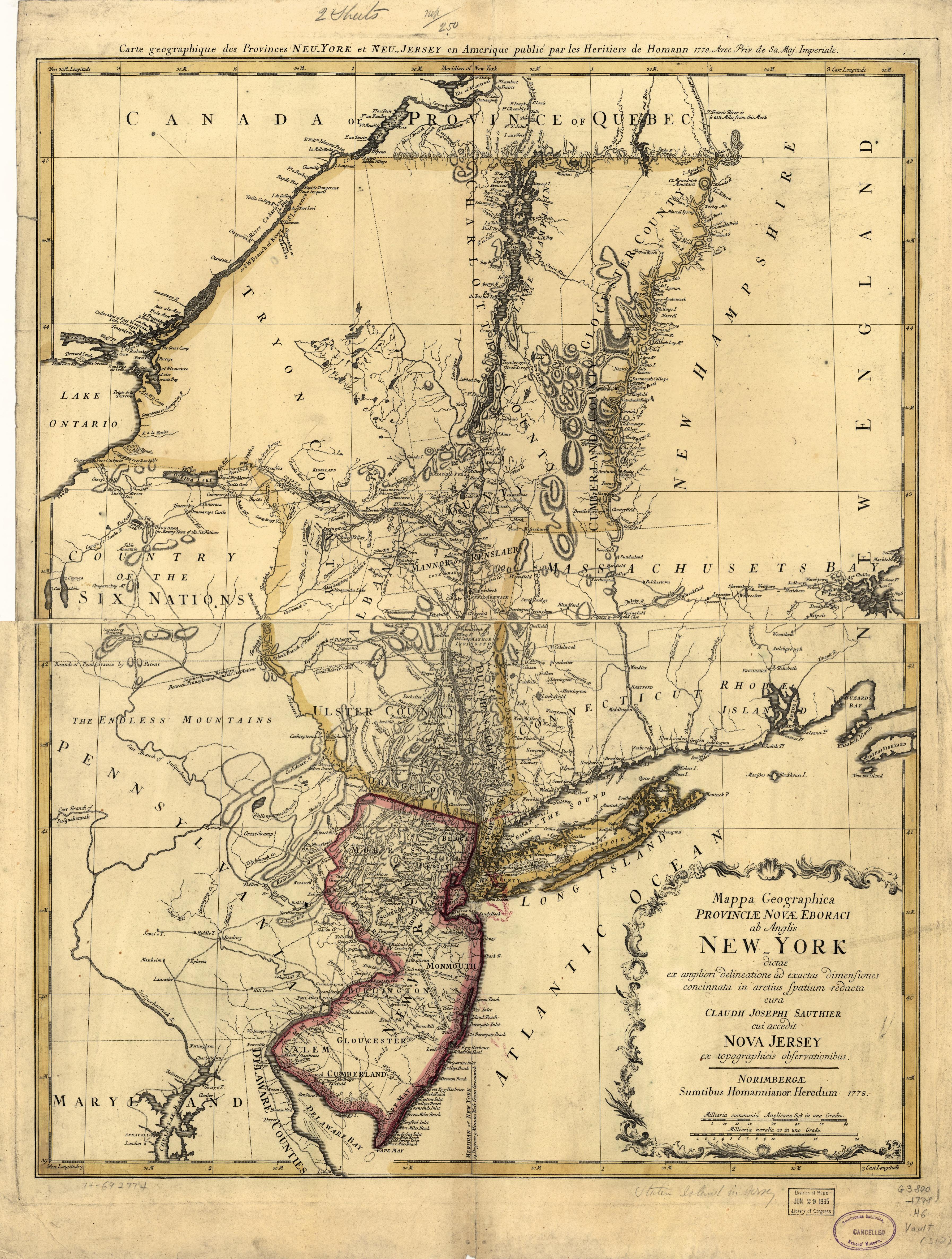
Bolton preserved an even more disturbing document in the same passage. In a footnote on slavery in Westchester, he records a 1705 deed of gift executed by Elizabeth Legget of Westchester in favor of her daughter Mary. The language reads: "I hereby give, grant and confirm, unto the said Mary, her heirs and assigns forever, my two negro children, born of the body of Hannah, my negro woman, of the issue of the body of Robin, my Indian slave" (Bolton 1848, chunk 1551).
Bolton included this deed not as a Van Cortlandt document but as evidence of the broader system of slavery that pervaded Westchester County. The language reveals the intertwined nature of that system. Hannah was an enslaved African woman. Robin was an enslaved Native American man. Their children — the "two negro children" of the deed — were of mixed African and Native American heritage, and they were being transferred as property from mother to daughter. The deed treated human beings as chattel, specifying parentage as one might document the bloodlines of livestock.
Bolton noted that this was among the earliest recorded evidence of Native American slavery in Westchester: "It is a well known fact, that slavery existed in this county at an early period of its settlement, of which abundant evidence can be produced, but no record appears that native Indians were enslaved until 1705" (Bolton 1848, chunk 1551). He added that "there are also several bills of sale recorded of Indian squaws being furnished by a dealer in New York, named Jacob Decay" — establishing that the enslavement of indigenous women was not an isolated incident but a documented trade.
The Kitchawank Connection
The presence of enslaved Native Americans in Westchester in 1705 has a specific historical context. The Kitchawank, the Wappinger band that had occupied Croton Point and the surrounding territory, had signed a peace treaty with the Dutch in 1645 after the devastating Kieft's War. By 1682, they had sold Croton Point to Cornelius Van Bursum — the same deed that preserved the place-names Navish and Senasqua (Scharf 1886, chunk 3989).
The Van Cortlandt Manor itself was built on territory assembled through purchases from indigenous peoples. Stephanus Van Cortlandt had acquired "the land between Croton and Peekskill from Native peoples" beginning in the 1670s, eventually accumulating 86,000 acres under a royal charter in 1697 (Wikipedia, "Van Cortlandt Manor"). "The land acquisition involved purchases from the Kitchawank (a Lenape Wappinger tribe) and the Rumachenanck people" (Wikipedia, chunk 730).
The progression is painful to trace: within a generation of selling their land, indigenous peoples in Westchester were being enslaved on the estates built on that land. Bolton's documents do not identify Matty, Sarah, Robin, or Hannah by tribal affiliation. But the timeline — indigenous land sales in the 1680s, indigenous slavery documented by 1705 — suggests that the people being enslaved may have come from the very communities that had recently lost their territory.
The Philipse Parallel
The Van Cortlandt family's involvement in slavery was not anomalous. J. Thomas Scharf, in his 1886 *History of Westchester County*, charged the neighboring manor lord Frederick Philipse with "complicity with piracy, smuggling and the slave trade" (Scharf 1886, chunk 3660). Philipse — whose vast patent covered much of what is now Westchester County, and whose fraudulent land expansion would later be challenged by Daniel Nimham — derived his wealth in part from the trafficking of enslaved Africans alongside more conventional trade in furs and goods.
Shonnard's 1900 history added context about the colonial slave trade more broadly: the "approved course usually pursued was to load a ship with goods for exchange and sale on the Island of Madagascar. Rum costing two shillings per gallon" was a principal trade good (Shonnard 1900, chunk 4892). The same Hudson River corridor that served as a smuggling route for colonial-era slave traders would, two centuries later, serve the bootleggers of Prohibition.
What the Museum Tells
Today, Van Cortlandt Manor presents the domestic life of the colonial period with careful attention to material culture — the kitchens, the gardens, the furnishings. The Wikipedia entry for the manor acknowledges that "the estate's operations relied on enslaved Africans, despite the family's later Revolutionary ideals" (Wikipedia, chunk 730).
The challenge for any honest interpretation of the site is to hold two truths simultaneously: that this was a place where the ideals of liberty were discussed and advanced, and that it was a place where human beings were owned. Bolton's documents add a dimension that even the museum's acknowledgment of African slavery does not fully capture: that Native Americans were also enslaved here, that mixed-race enslaved families existed, and that indigenous people were bought and sold by dealers in New York City.
The Revolutionary generation that gathered at Van Cortlandt Manor to plan the war for independence did so in a house maintained by enslaved hands. The contradiction was not hidden — it was simply unresolvable within the moral framework of the time. Two centuries later, it remains unresolved in the way we tell the story.
Sources Consulted
- Bolton, Robert Jr. *History of the County of Westchester* (1848), chunk 1551 — Van Cortlandt will, Legget deed, slavery in Westchester
- Scharf, J. Thomas. *History of Westchester County* (1886), chunk 3660 — Philipse and the slave trade
- Shonnard, Frederic. *History of Westchester County* (1900), chunk 4892 — colonial trade patterns
- Wikipedia, "Van Cortlandt Manor" (chunk 730) — land acquisition, enslaved labor
All direct quotes are verbatim from the cited sources. Each factual claim was verified against the Croton Historical Archive database.