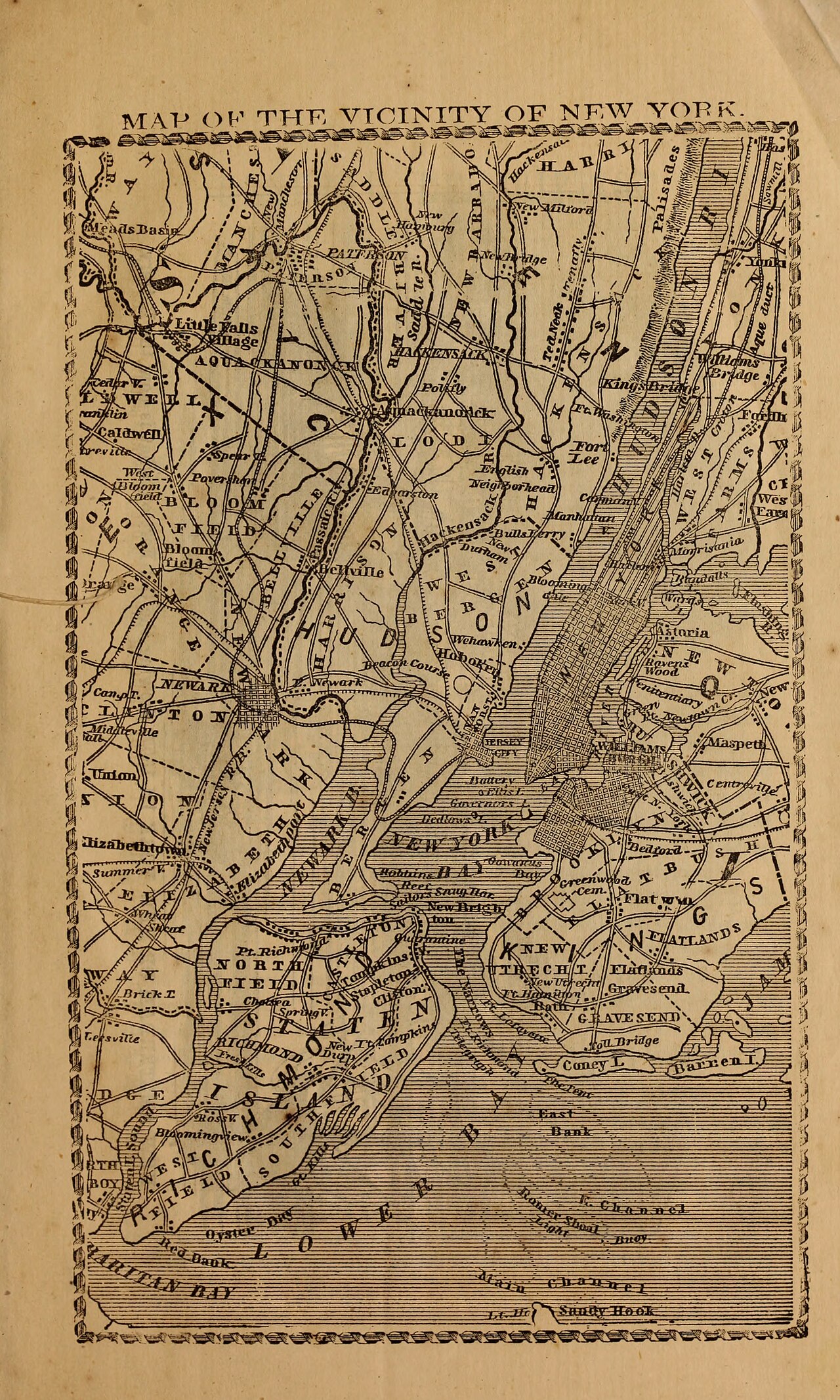
On February 14, 1682, a Wappinger man identified in the colonial record as Askawanes put his mark on a deed transferring land along the east bank of the Hudson River to the Van Cortlandt family. A year later, in 1683, a man recorded as Oskewana sold additional land in the same area. The two names are almost certainly variants of the same name, belonging to the same person or to a close relative — the variation is the kind of inconsistent phonetic spelling that English and Dutch clerks produced when they tried to write Algonquian names by ear.
No colonial document records what "Askawanes/Oskewana" meant in the Munsee-Lenape language of the Wappinger. It was a personal name, not a descriptive word — the name of an individual, probably a minor sachem or elder with the authority to sign deeds. Whoever he was, he lived and died more than three centuries ago, and nothing survives of him except his mark on two pieces of paper and the name he left behind.
That name became Oscawana.
The Hamlet on the River
By the mid-19th century, Oscawana was a small Hudson River hamlet in the town of Cortlandt, just north of the village then called Croton Landing (later Croton-on-Hudson). It was the kind of place that grew up around a steamboat stop — a dock, a few stores, a hotel, and houses clustered along the dirt road that led down to the water. The Hudson River Railroad was chartered in 1846 and opened north to Peekskill on September 29, 1849. During construction it established a station called "Peg's Island" at the small point of land that stuck out into the river near Oscawana. The station was later renamed to match the hamlet.
The Oscawana station served the hamlet for 124 years. It finally closed on July 1, 1973, when Penn Central — the successor railroad to the old New York Central — consolidated service at the nearby Croton-Harmon station. By that time, Oscawana had been eclipsed by the bigger stop to the south and was no longer a meaningful commercial center.
But in its heyday, Oscawana was a busy little place. In the late 19th century, day-trippers from New York City rode the steamboats up the Hudson to disembark at Oscawana. There was a hotel with a dance pavilion. A nearby hotel-restaurant served meals to visitors. A local tavern — Eddie Rogan's Bar — operated on a houseboat moored at the dock, giving drinkers the novel experience of drinking on the water. (Eddie Rogan's bar would have been a good place to be during Prohibition, given that the rest of the country's houseboat bars were being raided, but no direct Prohibition-era record of Rogan's operation has surfaced.)
The hamlet sits at an interesting geographic point. To the west, the Hudson River opens out into Haverstraw Bay — one of the widest stretches of the river, where tides and winds create conditions more like an estuary than a channel. To the east, the land rises quickly into the wooded hills of Cortlandt. Oscawana was both a river town and a gateway to the interior.
The Lake That Shares the Name
There is a second place called Oscawana in the region, and it causes endless confusion. Lake Oscawana is a 386-acre natural lake in Putnam Valley, Putnam County — a completely different body of water in a completely different county. The lake was originally called Horton's Pond after Joshua Horton, an early landowner. It was renamed Lake Oscawana in the 1850s, borrowing the same indigenous name that had attached itself to the Cortlandt hamlet on the Hudson.
Both names trace back to Askawanes/Oskewana, but they refer to different places. The hamlet and county park are in Westchester County on the Hudson; the lake is in Putnam County, miles inland. When someone says "I'm going to Oscawana," it matters which one they mean.
The Reusens Estate
The single most dramatic chapter in the history of what is now Oscawana County Park began in the 1880s, when a Belgian-American financier named Guillaume A. Reusens began assembling a large estate on the property. Reusens (c. 1837 – January 5, 1915) was born in Belgium, naturalized as a U.S. citizen in 1886, and described in contemporary accounts variously as a Belgian baron, a tobacco exporter, a one-time partner of Baron Rothschild, and a purchasing agent for the Vatican. He arrived in the United States "with a letter of unlimited credit from European banks," which was almost literally true.
Mexican Railroad Money
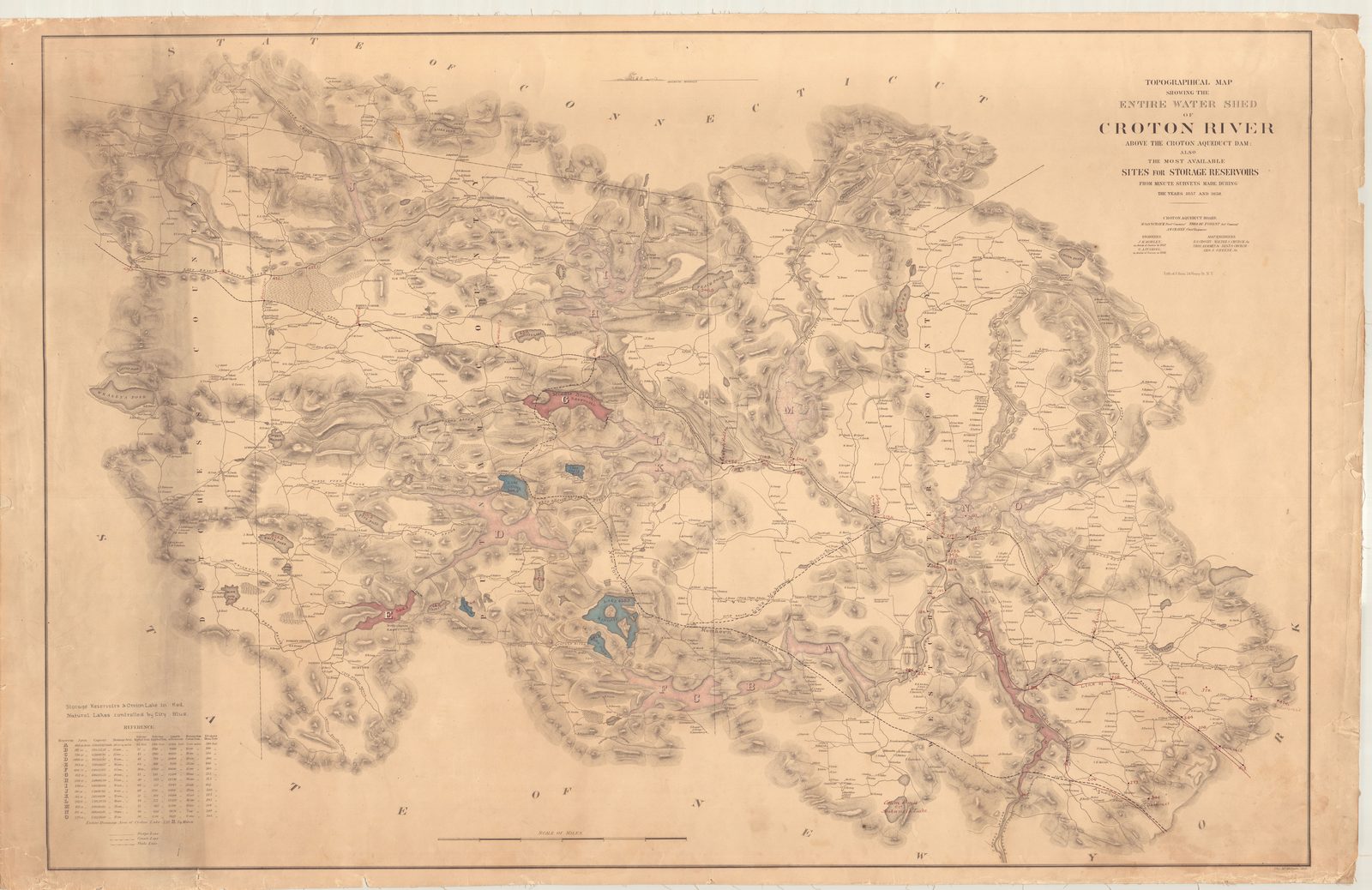
Reusens's actual source of wealth is documented in a remarkable primary source: a United States Supreme Court case from 1885, Mexican National Construction Company v. Reusens (118 U.S. 49). The case survives in the Supreme Court's archived records and is available in full on the Internet Archive. It describes how Reusens — "an alien resident in New York" — commenced an action by attachment in the New York State Supreme Court on February 7, 1884, suing the Mexican National Construction Company for $25,000 plus interest for "money had and received." On August 12, 1885, he obtained judgment for $28,062.86. The Westchester County sheriff levied $30,000 on deposit in the American Exchange National Bank of New York to satisfy the claim.
What this tells us is that Reusens was a significant creditor and investor in the railroad construction boom of the 1880s — specifically, in the Mexican National Construction Company, which was building a rail line from Laredo to Mexico City under Rothschild banking sponsorship. The Mexican connection was the real source of his fortune. By the mid-1880s, he had enough liquid capital sitting in a single Manhattan bank account to buy most of Oscawana. The Belgian baron story is plausible; the Vatican purchasing agent story is harder to verify. But the Supreme Court docket is real and it places Reusens squarely in the circle of Gilded Age international financiers who underwrote the railroad expansion of the Americas.
Reusens began assembling the Oscawana estate piece by piece: from Margaret Merritt in 1888, Henry P. De Graff (the NYC furniture/banking tycoon) in 1890, and Gilbert R. Fox and the Washington Park Land Company in 1894. The chain of title ran back to the Cruger family — the original 18th-century landowners of the area — through R.A. Wilkinson, Catherine and Gilbert R. Fox, Henry DeGraaf, and Warren Leslie before reaching Reusens.
A 1912 court case — New York Central & Hudson River Railroad v. Guillaume A. Reusens et al., a condemnation proceeding in the Westchester County Supreme Court — documents in sworn testimony what the estate contained by that point. The 1912 inventory, combined with the 1911 E.E. Ballard photograph album (later compiled by Lynn Stevens in 1964), lists:
- The large uninhabited Cruger/Fox House (believed to be the original Nicholas Cruger home from the 1700s) - Powers House (two-story frame) - Johnson House (two-family frame) - A stone cow barn, built in 1907 — the only structure confirmed built by Reusens himself - A stable with coachman's house - A boat house (donated to the Ossining Shattemuc Club in 1914) - The judges' stand (two stories, at the center of the private racetrack) - A private horse racetrack with metal pipe fencing - The Fish House Spring complex - Brick reservoirs for the racetrack and the main house (windowless, doorless) - An ice house, chicken coop, dog kennel - A soil/manure pit, a dam and waterfall, an ornate fountain, and a spring house
The property was called "Long View." Reusens used the racetrack privately, exercising and training horses housed in his stables — it was a gentleman-breeder's facility, not a commercial racing operation, and no Reusens-bred thoroughbred appears in the published stud-book records of the period.
Reusens's nephews Stanislaus DeRidder and Eugene DeRidder inherited the estate after his death. Eugene died in 1916, just a year later. A period of litigation followed between Stanislaus and Eugene's heirs over the division of the property. Stanislaus ultimately took sole ownership and renamed the place "Long View."
Stanislaus himself died on March 7, 1934. His widow Anne married Martin McAndrews and operated the place as a working farm until her own death on September 20, 1948. By this point the estate had passed out of the horseracing era and into agriculture. It also picked up a new name that would last: McAndrews Estate.
The Abandoned Years
After Anne McAndrews died in 1948, the estate began a long slide into decay. There were no heirs with the resources or interest to maintain the property. The colonial houses, the stables, the racetrack — everything that Reusens had built — deteriorated through the 1950s and early 1960s. Vandals broke in. A fire gutted one or more of the buildings. The racetrack fell into ruin. What had once been one of the finest country estates in Westchester County became a famous local eyesore — a ghost property that teenagers dared each other to explore after dark.
In 1965, Westchester County condemned the McAndrews Estate. The remaining structures were determined to be unsafe and beyond restoration. By 1969, the last of the buildings had been demolished. The 1882 racetrack, the Gilded Age stables, the brick reservoir, and the ice house — all of it was gone.
The 1965 condemnation generated an active valuation dispute — the county's initial offer was $180,000 and the final court settlement was $510,000, nearly three times the opening bid. The trial-court case file has never been reported in the New York law reporter system (condemnation awards at this level typically aren't). The original docket, pleadings, and appraisals are stored offline in the Westchester County Clerk's pre-2002 case archive (110 Dr. Martin Luther King Jr. Blvd., White Plains) and can be ordered by phone at 914-995-3075 under party names "McAndrews" or "County of Westchester." Complementary administrative records — surveys, acquisition correspondence, appraisal files — live in the Westchester County Archives, Parks Department Series 375 (Commissioner's Office Records, 1925-1989), Series 70 (Administrative Records, 1922-1969), and Series 149 (Property Records, 1923-1965). The same offline-only status applies to the 1912 Reusens condemnation: N.Y. Central & Hudson River Railroad Co. v. Guillaume A. Reusens et al. was a trial-level case with no appellate citation and the file sits in the Clerk's pre-1920 archive.
The Park
Westchester County purchased the land in 1958, seven years before the final condemnation and eleven years before the buildings came down. The park opened to the public in stages as the estate buildings were removed and the landscape was restored.
Oscawana County Park today covers approximately 9 acres of active parkland (with the broader county holding including the ruins of the McAndrews estate considerably larger). It is managed under an intermunicipal agreement between Westchester County and the Town of Cortlandt. The park includes a walkway over the railroad tunnel that leads to Hudson River shoreline views, tidal marshlands, and picnic areas.
The Hudson River shoreline at Oscawana is a known stopover point for monarch butterfly migration — every September, thousands of butterflies pass through on their long journey south to Mexico. Birders visit in spring and fall for warbler migrations. The tidal marshes support great blue herons, egrets, and ospreys.
Oscawana Island
A third piece of the Oscawana name is a small, separately managed piece of land: Oscawana Island Nature Preserve. The island — a rocky outcrop just offshore from the park — was reportedly once owned by George C. Tilyou, the founder of Coney Island's famous Steeplechase Park amusement area. Tilyou, who died in 1914, was a significant figure in the history of American popular entertainment, and his ownership of a small rocky island in the Hudson is one of the more unexpected corners of his biography.
Whether Tilyou ever actually visited Oscawana Island, or simply held it as an investment, is not documented. The island today is a small nature preserve, managed separately from the main park, and accessible to the public on foot at low tide.
What the Name Holds
Oscawana is, in a way, a name that has been passed from hand to hand for more than three centuries without anyone quite knowing what it originally meant. Askawanes signed a deed in 1682 and vanished from the historical record. Colonial clerks wrote his name down in variant spellings. The hamlet that grew up on the river took the name. So did a railroad station. So did a lake in a different county. So did a Belgian racehorse breeder's estate, which became an abandoned ruin, which became a county park. The monarchs still stop every September to rest on their way to Mexico, drifting through the tidal marshes of a place whose name belongs to a man the Dutch bought this land from more than 340 years ago.
Sources Consulted
- Wikipedia. "McAndrews Estate"
- Wikipedia. "Lake Oscawana" — separate Putnam County lake, not the Westchester hamlet
- Wikipedia. "Wappinger" — Nochpeem and Wappinger bands
- Wikipedia. "Hudson Line (Metro-North)" — Oscawana station history and closure
- Historic Hudson River Towns. "Cortlandt, NY."
- Scenes from the Trail. "Oscawana Island Nature Preserve."
- River Journal Online. "Tracking the Suburbanization of Crugers."
- Putnam Valley Historical Society. "Historic Putnam Valley."
- **1682 Croton deed signed by "Askawanes"** — Van Cortlandt Manor / Teller trading post records
- **1683 Van Cortlandt deed signed by "Oskewana"** — Westchester County colonial records
- **Mexican National Construction Co. v. Reusens, 118 U.S. 49 (1886)** — U.S. Supreme Court case establishing Reusens's role as a creditor in Mexican railroad construction. Full SCOTUS brief archived at Internet Archive: https://archive.org/details/per_scotus_1885_980
- Justia: https://supreme.justia.com/cases/federal/us/118/49/
- CourtListener: https://www.courtlistener.com/opinion/91664/mexican-constr-co-v-reusens/
- **1912 condemnation case** *N.Y. Central & Hudson River Railroad v. Guillaume A. Reusens et al.*, Westchester County Supreme Court — contains sworn testimony inventorying all Long View estate structures
- **1911 E.E. Ballard photograph album** (compiled by Lynn Stevens, 1964) — the definitive pre-demolition visual record of Long View
- *The New York Times*, August 5, 1919. "Bars $26,000 Fee in Will Contest" — primary record of the DeRidder/Walter estate litigation
- Robert S. Grumet. *Manhattan to Minisink: American Indian Place Names of Greater New York and Vicinity*. Oklahoma, 2013. ISBN 978-0806143361. Definitive scholarly treatment of Munsee place-names including Askawanes/Oskewana.
- Robert S. Grumet. *Beyond Manhattan: A Gazetteer of Delaware Indian History*. NYSM Record 5 (2014). Available at nysm.nysed.gov/sites/default/files/nysmrecord-vol5-1.pdf
- Peekskill-Cortlandt Patch. "History in Our Backyard: The McAndrews Estate" (Wes Pomeroy, May 2011).
- Peekskill-Cortlandt Patch. "Unlocked Secrets of the McAndrews Estate in Crugers" (June 6, 2011, with oral history from Martin J. McAndrews Jr.)
- Peekskill-Cortlandt Patch. "The End of The McAndrews Estate" — documents $180K initial offer vs. $510K court settlement in 1965
- **PeopleLegacy memorial for Guillaume Albert Reusens** at Assumption Cemetery, Peekskill — peoplelegacy.com/guillaume_albert_reusens-1v1G7=
- Frederic Cole. *The End of Long View* (Parts 1 & 2, YouTube) — demolition-era footage
- Westchester County Parks. "Oscawana County Park."
All direct quotes are verbatim from the cited sources. Each factual claim was verified against the Croton Historical Archive database.