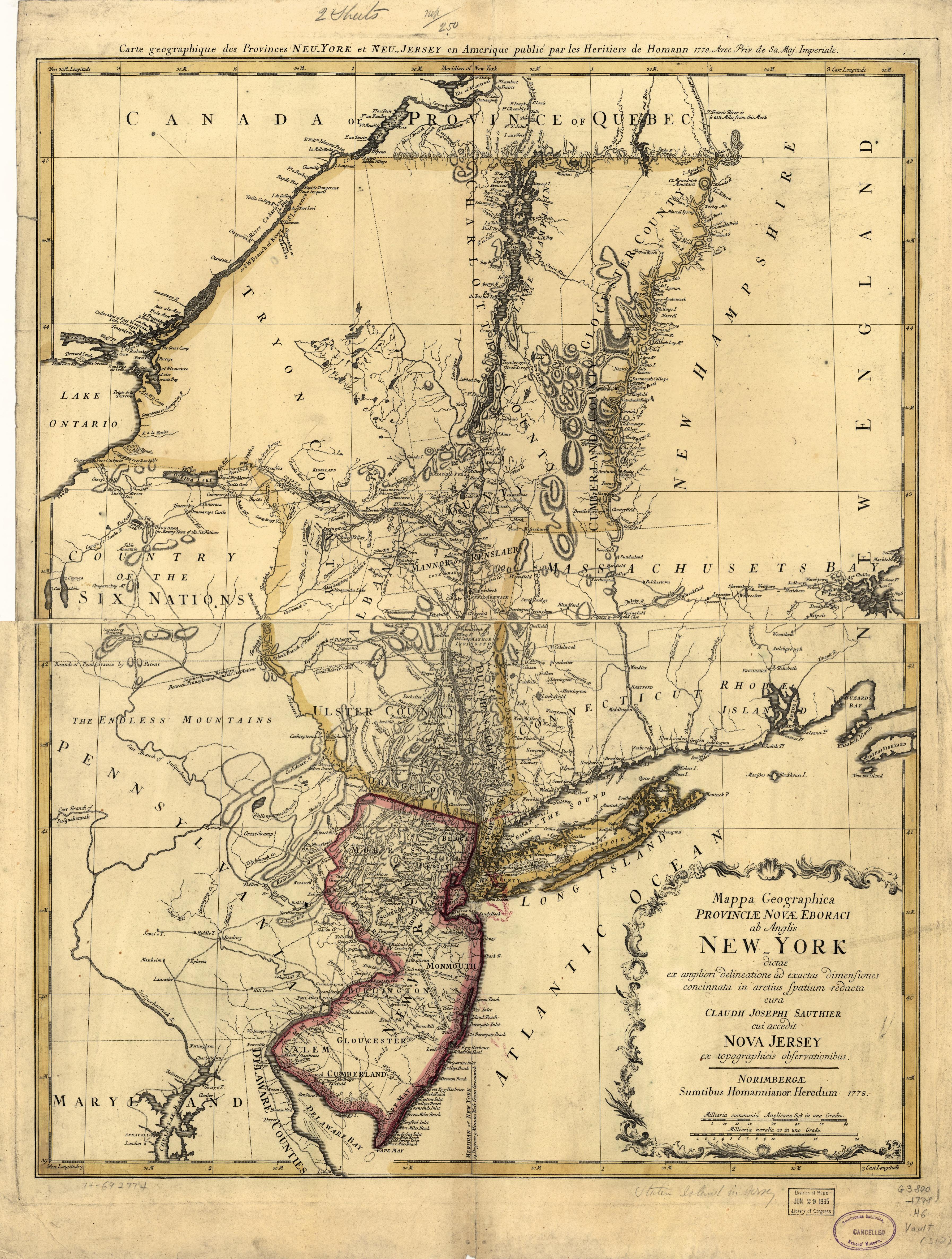
Where Was Crompond?
The name "Crompond" appears in Revolutionary War despatches, maps, and Loyalist letters as if it were a well-known fixed point in the landscape — "at Crompond," "the guard at Crompond," "the Crompond road," "the Presbyterian Church at Crompond."[1] Two generations later, a reader looking at a modern New York State atlas will not find it. Crompond is not a town, not a village, not an incorporated place. It is a lost name.
Revolutionary-era Crompond is in the area of present-day Yorktown Heights, the hamlet in the Town of Yorktown in northern Westchester County. The McDonald Interviews, consistently and without qualification, treat "Crompond" as the obvious name for this settlement. The Presbyterian Church at Crompond, the Crompond burying ground, the Crompond road (running north from Pines Bridge toward the Putnam County border), the Crompond militia guard house — these are fixed geographic references in the 1845–1850 interviews that every witness expects McDonald to understand.
In the 19th century the place name slowly migrated. The hamlet became Yorktown Heights; the church name changed; the burying ground was absorbed into St. Mary's Cemetery. When Lincoln Diamant's late-20th-century research on Westchester place names went looking for "Crompond," he had to reach back to the 1868 F.W. Beers atlas and the McDonald manuscripts themselves for its original location. The 1860s usage "Crompond" / "Crom Pond" was already antiquated.
On the morning of June 24, 1779, Crompond was a small but named settlement with a Presbyterian church, a cluster of houses along the main road north from Pines Bridge, a militia guard house, and a burying ground that would, two years later, receive the uninscribed graves of Colonel Christopher Greene and Major Ebenezer Flagg after the Pines Bridge attack. It was about 18 miles southeast of West Point and 30 miles north of Manhattan Island. And it was burned by Banastre Tarleton's British cavalry.
Six Witnesses to the Raid
We have six McDonald Interview witnesses whose testimony touches the burning of Crompond:
| Witness | Date | WCHS item | Testimony | |---|---|---|---| | James Mandeville | 1847 | [1289](https://collections.westchestergov.com/digital/collection/mcdonald/id/1289) | Names Tarleton; gives the date (June 24); names the ford (Vail's); describes the "semi-circle" approach | | Nathaniel Montross | 1848-10-17 | [1489](https://collections.westchestergov.com/digital/collection/mcdonald/id/1489) | Names Cudney's ford; documents John Shaw killed and the Presbyterian Church burned | | Benjamin Kipp (solo) | 1847-11-20 | [666](https://collections.westchestergov.com/digital/collection/mcdonald/id/666) | "Vail's or some other ford"[2]; the "unexpected quarter" approach | | Lydia Vail | 1847-11-19 | [1353](https://collections.westchestergov.com/digital/collection/mcdonald/id/1353) | Eyewitness to the retreat across Pines Bridge; "all horse" | | Sylvanus Townsend | 1847-10-22 | [655](https://collections.westchestergov.com/digital/collection/mcdonald/id/655) | Captain Keeler's fingers severed trying to surrender, June 1779 | | Benjamin Acker | 1847-11-20 | [982](https://collections.westchestergov.com/digital/collection/mcdonald/id/982) | Separate 1779 night raid with 200 horse plus infantry |
Thomas Strang's October 1845 interview (WCHS 380) is a seventh source for the burying ground at Crompond and the later graves of Greene and Flagg, but is not about the 1779 raid itself. For Strang's testimony see Story 22, [At Davenport House, Before Sunrise](/story/22_pines_bridge).
Mandeville Names the Commander and the Route
James Mandeville's 1847 interview is the best single source on the tactical shape of the Crompond raid. Mandeville, a longtime Peekskill hotel keeper (1760–1848) whose family had been deeply embedded in the Revolutionary-era community around the upper Croton, gives a route description with rare specificity:[^1]
<em>"On the 24th of June, Tarleton came up by a circuitous route, going up the Croton above Pines Bridge one mile and a half or more above, crossed at Vail's ford, advanced upon Crompond from the east by a road which bends like a semi-circle."<sup class="fn-ref"><a href="#fn-3" id="fnref-3-b174d3">[3]</a></sup></em><sup class="fn-ref"><a href="#fn-3" id="fnref-3-b174d3">[3]</a></sup>[^1]: WCHS McDonald Interviews item 1289, Mandeville James interview of 1847. Hufeland Mss. Book 1, Vol. 4. Digital record: https://collections.westchestergov.com/digital/collection/mcdonald/id/1289 . Full transcription: [history.croton.news/mcdonald/mcdonald_mandeville_james](https://history.croton.news/mcdonald/mcdonald_mandeville_james).
Four tactical facts land in this one sentence:
1. Banastre Tarleton — the British Legion cavalry commander, at this point in his career still a major serving under Lt. Col. David Wemyss and not yet the famous "Bloody Tarleton" of the Southern campaign. Tarleton is explicitly named as the commander of the Crompond raid. 2. The date was June 24, 1779. Mandeville is categorical. (Tarleton was wounded at the Battle of Pound Ridge less than a week later, on July 2 — the two engagements belong to the same week of Tarleton's first independent operations in the Neutral Ground.) 3. The approach was "circuitous" — going up the Croton River "one mile and a half or more above" Pines Bridge, upstream of the obvious crossing, to reach Vail's Ford. This is the ford Lydia Vail's family is named for, and which the earlier research for [Story 13, Below the Dam](/story/13_croton_gorge_park) attempted to locate precisely; Mandeville's "above Pines Bridge a mile and a half or more" places Vail's Ford at approximately the same site the New Croton Reservoir now covers. 4. The final approach to Crompond was from the east "by a road which bends like a semi-circle."[3] Tarleton did not ride straight in from Vail's Ford. He took a looping road that circled east of the village before coming in from an unexpected direction. This is a classic cavalry surprise tactic — approach from the direction the defender is not watching — and Mandeville's vivid phrase "a road which bends like a semi-circle"[3] is the kind of topographic detail that only someone who knew the country personally would remember.
The semi-circle road Mandeville describes may be the old Croton/Peekskill ridge road that runs east-northeast from the Vail's Ford area and then curves back south toward modern Yorktown Heights. We do not have period maps precise enough to trace Tarleton's exact route — the Erskine 1778–1780 and Rochambeau 1782 maps give the major roads but not the local farm lanes — and the terrain has been so altered by the 1907 reservoir flooding that reconstructing the path on the ground is difficult.
Benjamin Kipp: "Vail's or Some Other Ford"[2]
Benjamin Kipp's November 20, 1847 solo interview — recorded on a notebook page that also preserves the opening sentences of Benjamin Acker's account of ferrying Smith and André across the Hudson — gives an independent corroboration of the Crompond raid's approach:[^2]
<em>"The British party that burnt Crompond advanced circuitously, crossing the Croton at Vail's or some other ford, and coming from an unexpected quarter into the Crompond road at Halleck's then called Delavan's Mills."<sup class="fn-ref"><a href="#fn-2" id="fnref-2-be2962">[2]</a></sup></em><sup class="fn-ref"><a href="#fn-2" id="fnref-2-be2962">[2]</a></sup>[^2]: WCHS McDonald Interviews item 666, Kipp Benjamin solo interview of November 20, 1847. Hufeland Mss. Book 1, Vol. 5, pp. 656–658. https://collections.westchestergov.com/digital/collection/mcdonald/id/666 . Full transcription: [history.croton.news/mcdonald/mcdonald_kipp_benjamin_666](https://history.croton.news/mcdonald/mcdonald_kipp_benjamin_666).
Kipp cannot quite remember the ford's name — "Vail's or some other ford"[2] — but names the place where the British force re-entered the Crompond road: Halleck's, formerly called Delavan's Mills. This is a new geographic fix — the mill site of Delavan/Halleck is where Tarleton's circuitous approach rejoined the main road. The site is in the vicinity of the modern Pines Bridge / Baldwin Place area. Kipp's phrase "coming from an unexpected quarter" independently corroborates Mandeville's "approached from the east" — the surprise was not where the British came from but how they got there.
Nathaniel Montross Names a Different Ford and the Capture of Captain Teller
A third independent witness, Nathaniel Montross (1770–1858), places Tarleton's crossing at a different ford and preserves a detail that none of the other McDonald witnesses record:[^3]
<em>"When Tarleton came out to Crompond in 1779, he crossed the Croton at Cudney's ford two and a half miles above Pines Bridge. He then went about two miles on the Somers road where they took Captain Teller whose company was at Crompond that day on duty, and who had been home that night on a visit to his wife. They then proceeded to Crompond with Teller riding in front to deceive the Americans. When they approached the enemy at Crompond his (Teller's) men said: 'Who are there coming? Why there's the Captain with some of Sheldon's horse — Why there's Captain Teller — They must be our folks,' &c."</em>
[^3]: WCHS McDonald Interviews item 1489, Montross Nathaniel interview of October 17, 1848. Hufeland Mss. Book 1, Vol. 3. https://collections.westchestergov.com/digital/collection/mcdonald/id/1489 . Full transcription: [history.croton.news/mcdonald/mcdonald_montross_nathaniel](https://history.croton.news/mcdonald/mcdonald_montross_nathaniel).
Montross's "Cudney's ford" is either a different name for Vail's Ford, a different upstream crossing, or a second detachment's route. The three witnesses — Mandeville, Kipp, and Montross — collectively name Vail's Ford / Cudney's Ford / "some other ford" as the crossing, each using the name their own family knew. But Montross's most valuable detail is not the ford name. It is the capture of Captain Teller — a Continental officer whose company was on duty at Crompond that day and who had slipped home the night before to see his wife. The British used him as an unwitting decoy on the final approach: his own men, seeing a familiar silhouette in front of a mounted troop, read the column as "some of Sheldon's horse" and were slow to raise the alarm. It is the single best piece of tactical testimony for how Tarleton achieved surprise.

Montross's interview also records an entirely separate engagement — Simcoe's wounding of his father David Montross — and contains the poignant "Master, freedom is a great thing"[4] quotation from the enslaved man Jack that is reproduced in [Story 07, Slavery at the Patriots' Manor](/story/07_slavery_patriots_manor). But Montross does not name John Shaw, does not mention Delavan's stables, and does not record the burning of the Presbyterian Church. Those details come from a different witness whose McDonald testimony Bolton preserved in 1881.
Thomas Strong: John Shaw, Delavan's Stables, and the Meeting House
Thomas Strang of Yorktown (also spelled "Thomas Strong" in nineteenth-century published sources) was interviewed by McDonald on October 6, 1845 (WCHS item 380). The extract currently transcribed in the Westchester County Historical Society catalog preserves his account of the Abercrombie raid on his family's house and the Greene/Flagg burial at Crompond. But Robert Bolton, writing his 1881 History of the County of Westchester with access to the McDonald manuscript as it then existed in the hands of the New York historian George Moore, preserves a richer version of the Strong testimony that gives us the specific Crompond atrocities the Montross interview does not.[^3a]
[^3a]: Bolton, Robert Jr. A History of the County of Westchester, Vol. II (1881), Section on Crompond and Yorktown. Internet Archive: `historyofcountyo02bolt`. Bolton's own footnote reads: "The late Thomas Strong testified, McDonald's MS, 1844, in possession of Geo. Moore, Esq."[5] The fuller Strong testimony Bolton preserves is not in the currently-transcribed WCHS 380 extract, suggesting Bolton had access to a continuation of the manuscript page that has not yet been machine-read.
Bolton's transcription of Strong's testimony documents two raids, not one:
<em>"The late Thomas Strong testified 'that when the British, under Abercrombie, came to Crompond and burnt Strong's house, it was in the afternoon. But when their light horse arrived under Tarleton, it was early in the morning of the 24th of June. Tarleton came up by a circuitous route, following the Croton above Pine's Bridge one mile and a half or more, crossing the Croton at Vail's ford, advanced upon Crompond from the east by a road which winds like a semi-circle, coming into the Crompond road a little south of where Delavan lived. It was at Delavan's house, where they found John Shaw, whom they killed — mistaking him for Capt. Delavan. This happened in the morning of June 24th, on the road from Crompond to Pine's Bridge, about three-quarters of a mile from Crompond. The British burnt the Meeting House and parsonage and retired upon Pine's Bridge. On the 3d of June, 1779, Major Abercombie, burnt Mayor Strong's house then occupied as a Court House, and also burnt a store house then used as a depot for arms and stores, &c., for the military. Shaw was killed at Delavan's stables; he defended himself stoutly, but was set upon by five or six burly horsemen and cut to pieces.'"</em>
Three facts of first-order importance come out of this passage:
- John Shaw — an American soldier — killed in the raid. Strong places him at Delavan's stables, killed because the British mistook him for Captain Delavan himself. Strong adds that Shaw "defended himself stoutly, but was set upon by five or six burly horsemen and cut to pieces." This is a named casualty that the published histories of the Crompond raid do not preserve. - The Meeting House at Crompond was burned (the parsonage with it) on June 24, 1779. The Crompond Presbyterian Church (the ancestor of the churches later rebuilt in modern Yorktown Heights) is named by Strong as the specific target. A note on the chronology: per Bolton elsewhere, the particular meeting house standing in 1779 had been built circa 1738; it was rebuilt after Tarleton's fire; the rebuilt version was itself destroyed by a different fire in June or July 1799, exactly twenty years after the Revolutionary burning. - A SECOND raid on June 3, 1779 — twenty-one days before Tarleton. Major Abercombie (Abercrombie) led a detachment of British infantry that burned "Mayor Strong's house then occupied as a Court House"[6] and a store house used as a military arms depot. This is a separate event from Tarleton's cavalry raid and has largely disappeared from published Westchester Revolutionary War accounts. The Strong testimony, in combination with Abraham Weeks and the other McDonald witnesses for 1781, fixes two distinct 1779 raids on Crompond: Abercrombie's infantry raid on the afternoon of June 3, and Tarleton's cavalry raid on the morning of June 24.
A Note on Strang vs. Strong vs. Strang
Three different men named Strang, Strong, or some combination appear across this series of articles, and they are not the same person. Thomas Strang of Yorktown (WCHS 380), whose richer testimony Bolton 1881 preserves as "Thomas Strong," is a Whig officer's son and the primary source for the Crompond raids, the Greene/Flagg burial, and the Caleb Morgan affidavit. A separate figure, Strang the Refugee casualty, was killed by Lt. William Mosier's order at Mosier's Fight on December 2, 1781 (see [Story 23, The Lieutenant Was Being Shaved](/story/23_mosiers_fight)). And a third, Oakley — whose interview with McDonald gives the Pound Ridge tactical testimony — appears in a family line that overlaps with Yorktown Strangs. The early nineteenth century spelled the surname interchangeably as Strang, Strong, and occasionally Strange; Bolton chose Strong and McDonald's clerk chose Strang for the same man. We use Strang when quoting directly from the McDonald transcript and Strong when quoting Bolton 1881.
Captain Keeler's Fingers
Sylvanus Townsend, interviewed in October 1847, adds what may be the most wrenching single detail about the Crompond engagement:[^4]
<em>"Captain Keeler taken at Crompond in June 1779, intended to surrender, but presenting his sword point foremost received a cut which cut off several of his fingers. He was from North Salem."<sup class="fn-ref"><a href="#fn-7" id="fnref-7-cbdbe4">[7]</a></sup></em><sup class="fn-ref"><a href="#fn-7" id="fnref-7-cbdbe4">[7]</a></sup>[^4]: WCHS McDonald Interviews item 655, Townsend Sylvanus interview of October 22, 1847. Hufeland Mss. Book 1. https://collections.westchestergov.com/digital/collection/mcdonald/id/655 . Full transcription: [history.croton.news/mcdonald/mcdonald_townsend_sylvanus](https://history.croton.news/mcdonald/mcdonald_townsend_sylvanus).
A named American captain from North Salem — Keeler — was trying to surrender to Tarleton's cavalry. In 18th-century convention, surrendering an officer's sword was a formal ritual of submission: you reversed the blade and presented the hilt to the enemy commander, who would typically return it as a gesture of honorable captivity. Keeler presented his sword point foremost. Whether this was a tactical error, a deliberate provocation, or a miscommunication across the chaos of the raid is not in Townsend's testimony. What is in the testimony is the consequence: a British cavalryman, reading the point-first sword as an attacking gesture rather than a surrender, cut off several of Keeler's fingers with a single stroke. The wound disabled his sword hand but did not kill him. Keeler survived — long enough to be interviewed, or to have the story pass to his neighbors, long enough for Townsend to preserve it 68 years later.
Townsend dates the incident to "June 1779" without specifying the 24th. It is possible the incident happened on a different day of the same month — Tarleton's Crompond operation may have taken more than one day — but the month and the commander match Mandeville's date. It is the kind of small, specific atrocity that leaves no monument and enters the record only when an old man's family tradition reaches a chronicler who writes it down.
Lydia Vail Sees the Retreat
Lydia Vail, whose November 19, 1847 testimony is the key primary source for the May 1781 attack on Davenport House (see Story 22), was also — as a very young girl — an eyewitness to the retreat of Tarleton's force across Pines Bridge. Her account of the Crompond raid is brief but specific:[^5]
<em>"— The British party that burnt Crompond advanced circuitously, crossing the Croton at Vail's or some other ford, and coming from an unexpected quarter into the Crompond road at Halleck's then called Delavan's Mills. I saw Totten (or who ever commanded) and his troops (which were all horse) as they retired across the Croton by Pines Bridge. I think there were no negroes at Davenport house, but my grandfathers, when Greene was surprised."<sup class="fn-ref"><a href="#fn-2" id="fnref-2-be2962">[2]</a></sup></em><sup class="fn-ref"><a href="#fn-2" id="fnref-2-be2962">[2]</a></sup>[^5]: WCHS McDonald Interviews item 1353, Vail Lydia interview of November 19, 1847. Hufeland Mss. Book 1, Vol. 5. https://collections.westchestergov.com/digital/collection/mcdonald/id/1353 . Full transcription: [history.croton.news/mcdonald/mcdonald_vail_lydia](https://history.croton.news/mcdonald/mcdonald_vail_lydia).
Vail's account of the Crompond raid (pre-1781) transitions directly into her account of the May 14, 1781 attack on her grandfather's house — the two stories are placed back-to-back in her 1847 interview because they both involve British cavalry crossing the Croton from the south side. Her eyewitness detail for the Crompond raid: the retreating force was "all horse" — no infantry — and she saw them "retire across the Croton by Pines Bridge" rather than back across the upstream ford they had used on the approach. Tarleton's force, having accomplished the surprise approach and the burning, used the main Pines Bridge crossing for the retreat — exposing themselves more openly on the way out than they had on the way in.
The commander, she says, was "Totten (or who ever commanded)"[8] — a misremembering or a family tradition that conflated Tarleton with the later Loyalist officer Gilbert Totten. This kind of name-drift is common in seventy-year-old oral testimony. Mandeville and Montross are clearer that the commander was Tarleton; Vail is speaking from a family vague association of "British cavalry raid" with "Totten."
A Separate Raid? Benjamin Acker on the October 1779 Night March
Benjamin Acker's testimony, recorded on the same notebook page as Benjamin Kipp's solo interview (WCHS item 666, pages 658 ff., immediately following Kipp's Crompond paragraph), may describe a different raid:[^6]
<em>"I belonged to the guard that was watching the road near Roswell's corner about two miles below Clark's corner, when the British went up to burn Crompond in 1779. We hid. It was a dark night. About two hundred horse passed, and then at some distance came the infantry. I don't know whether they advanced at this time through White Plains or by way of Tarrytown."<sup class="fn-ref"><a href="#fn-9" id="fnref-9-e73ad2">[9]</a></sup></em><sup class="fn-ref"><a href="#fn-9" id="fnref-9-e73ad2">[9]</a></sup>[^6]: WCHS McDonald Interviews item 982, Acker Benjamin interview of November 20, 1847. Hufeland Mss. Book 1, Vol. 5, pp. 979–981 (continuing from the trailing fragment at the foot of item 666 p.665). https://collections.westchestergov.com/digital/collection/mcdonald/id/982 . Full transcription: [history.croton.news/mcdonald/mcdonald_acker_benjamin](https://history.croton.news/mcdonald/mcdonald_acker_benjamin).
Acker's description — about two hundred horse, then infantry at some distance, a dark night — does not match Mandeville's and Vail's accounts of a cavalry-only raid across Vail's Ford from the east. If Acker's testimony is about the same June 24 raid, then either (a) Tarleton had infantry support that Mandeville and Vail did not see, or (b) Acker's memory compressed two separate events. The more likely reading, we think, is that Acker is describing a second, larger British expedition to Crompond in 1779 — possibly the October 1779 raid by General Tryon's forces that burned additional houses and territory. The published record of Westchester raids in 1779 mentions multiple British incursions, and it is plausible that the June Tarleton raid and a larger autumn operation have been compressed into a single "the British burnt Crompond in 1779" tradition in some families while being remembered separately in others.
Acker's detail that the raid passed "Roswell's corner about two miles below Clark's corner"[9] locates his guard post specifically on the road network south of Crompond. The "pitch dark night" and the sequencing (horse first, then infantry at a distance) suggest a coordinated force on the march — not a small cavalry raid but a divisional-scale British expedition. This fits the pattern of the larger 1779 operations more than the smaller Tarleton raid of June 24.
We present Acker's account here because it belongs in any conversation about the 1779 Crompond burnings, with the note that Mandeville and Montross give a tight, cavalry-only June 24 raid and Acker gives a mixed-arms night march that may have been a separate event weeks or months later.
The Crompond Burying Ground
One of the consequences of Tarleton's June 24, 1779 raid was that the Crompond burying ground — the graveyard attached to the Presbyterian Church Tarleton burned — was pushed into Westchester memory as a place where Patriots lay. When Colonel Christopher Greene and Major Ebenezer Flagg were killed at the Davenport House two years later, on May 14, 1781, their bodies were carried to Crompond and buried in that same burying ground. They were placed in uninscribed rough-stone graves because the Continental Army did not have the resources in the final months of the war for formal monuments. See Story 22, [At Davenport House, Before Sunrise](/story/22_pines_bridge), for Thomas Strang's testimony on the burial.
Crompond — the village, the church, the burying ground — becomes, across three McDonald interviews spanning two separate raids (June 1779 and May 1781), a single continuous locus of Revolutionary-era violence and Revolutionary-era American martyrdom. By the time McDonald arrived to interview the old men and women of the area in 1845–1850, the village was slowly becoming Yorktown Heights, the church had been replaced, the graves were being forgotten, and the lane system around Davenport House and the Widow Griffin's was about to be flooded by the New Croton Reservoir.
What the Published Record Missed
The Crompond burning of June 24, 1779 is mentioned in most modern Westchester Revolutionary War histories as "Tarleton raided Crompond." The McDonald primary sources specify:
- Tarleton's route was "circuitous": up the Croton "a mile and a half or more above" Pines Bridge, crossing at Vail's Ford (Mandeville) or Cudney's Ford (Montross), then approaching Crompond from the east "by a road which bends like a semi-circle."[3] (Mandeville, WCHS 1289) - The British rejoined the main road at Halleck's, formerly called Delavan's Mills. (Kipp, WCHS 666) - The American militia guard at Crompond was commanded by Sergeant Crawford (a one-eyed man) and Captain Boyd — the same men who would later detain Smith and André overnight in September 1780. (Strang, WCHS 380; see Story 1) - An American soldier named John Shaw was killed at Delavan's stables — mistaken for Captain Delavan, cut to pieces by five or six horsemen. (Thomas Strong via Bolton 1881, Vol. II, from McDonald MS 1844) - The Crompond Meeting House and parsonage were burned on June 24, 1779. (Thomas Strong via Bolton 1881) - A SEPARATE earlier raid on June 3, 1779 under Major Abercrombie burned the Crompond Court House and an arms depot. (Thomas Strong via Bolton 1881) — this is a distinct event that most published histories have lost. - Captain Keeler of North Salem, trying to surrender, presented his sword point-first and was cut by a British cavalryman who misread the gesture — severing several of Keeler's fingers. (Townsend, WCHS 655) - The British force retreated across Pines Bridge openly, not via the upstream ford they had used for the approach. (Vail Lydia, WCHS 1353) - The force was "all horse" — Tarleton's Legion cavalry, no infantry. (Vail Lydia, WCHS 1353) - A separate 1779 raid with 200 horse plus infantry, at night, passing Roswell's Corner — possibly a different British expedition conflated with Tarleton's smaller raid in some family traditions. (Acker, WCHS 982)
Six independent McDonald witnesses preserve between them the commander, the date, the route, the crossing point, the target church, a named American casualty, the wound mechanism of a second named officer, the retreat route, the force composition, and a possible second raid from the same year. Bolton 1848, Scharf 1886, and Shonnard 1900 give us only the bare fact that "Tarleton raided Crompond." Everything else is in the manuscript pages.
Coda
Banastre Tarleton rode away from Crompond in the early afternoon of June 24, 1779 and was wounded at Pound Ridge eight days later. He recovered, returned to duty, and spent the next two years as the most feared cavalry officer in the British Army in America. The Presbyterian Church at Crompond was rebuilt — not at once, but within the generation — and the Crompond burying ground outlasted the village name itself. When Colonel Christopher Greene's body was carried to Crompond on May 14, 1781 and laid under a rough uninscribed stone, the church he was buried next to was the rebuilt successor to the one Tarleton had burned. The burying ground remembered.
Captain Keeler's name — we have no first name — survives in exactly one sentence from an old man named Townsend in 1847. John Shaw's name survives in one sentence from Nathaniel Montross in 1848. Neither man is on any published memorial to the Revolutionary War dead in Westchester County. They are here now.
References
- Bolton, Robert Jr. A History of the County of Westchester, from its First Settlement to the Present Time, Vol. II. New York: Alexander S. Gould, 1848., §775 — "Among other monuments in the grave yard, is the following : • In memory of the Rev. Silas Constant, who departed this life March 22, 1825, aged 75 years,…" [source] ↩
- mcdonald_interview_benjamin_kipp_666 ↩
- mcdonald_interview_mandeville_james_1289 ↩
- mcdonald_interview_montross_nathaniel_1489 ↩
- Bolton, Robert Jr. The History of the Several Towns, Manors, and Patents of the County of Westchester, from its First Settlement to the Present Time, Vol. II. New York: Charles F. Roper, 1881., §670 — "Samuel Sackett, about 1 740. u'j.oii the 2nd of January, 1739, ^^e find a deed for three acres of land given by Joseph Lane, Henry Beekman and Gertrude, his w…" [source] ↩
- Bolton, Robert Jr. The History of the Several Towns, Manors, and Patents of the County of Westchester, from its First Settlement to the Present Time, Vol. II. New York: Charles F. Roper, 1881., §672 — "ibove Pine's Bridge one mile and a half or more, crossing the Croton it Vails ford, advanced upon Crompond from the east by a road which iiiuihIs like a semi-…" [source] ↩
- mcdonald_interview_townsend_sylvanus_655 ↩
- mcdonald_interview_vail_lydia_1353 ↩
- mcdonald_interview_benjamin_acker_982 ↩
Sources Consulted
- Mandeville, James. Interview by John M. McDonald, 1847. WCHS McDonald Interviews item 1289, Hufeland Mss. Book 1, Vol. 4. https://collections.westchestergov.com/digital/collection/mcdonald/id/1289 . Full transcription: https://history.croton.news/mcdonald/mcdonald_mandeville_james . The best single source for the tactical shape of the June 24, 1779 raid: names Tarleton as commander, fixes the date, names Vail's Ford as the crossing, describes the "circuitous" approach via a road that "bends like a semi-circle."
- Montross, Nathaniel. Interview by John M. McDonald, October 17, 1848. WCHS McDonald Interviews item 1489, Hufeland Mss. Book 1, Vol. 3. https://collections.westchestergov.com/digital/collection/mcdonald/id/1489 . Full transcription: https://history.croton.news/mcdonald/mcdonald_montross_nathaniel . Names Cudney's Ford as the crossing (an alternate or additional crossing point to Vail's), preserves the killing of John Shaw as a named American casualty, and identifies the Presbyterian Church at Crompond as the specific building burned.
- Kipp, Benjamin (solo interview). Interview by John M. McDonald, November 20, 1847. WCHS McDonald Interviews item 666, Hufeland Mss. Book 1, Vol. 5, pp. 656–658. https://collections.westchestergov.com/digital/collection/mcdonald/id/666 . Full transcription: https://history.croton.news/mcdonald/mcdonald_kipp_benjamin_666 . Independent corroboration of the circuitous approach; names Halleck's, formerly Delavan's Mills, as the re-entry point to the Crompond road; uses the phrase "from an unexpected quarter."
- Vail, Lydia. Interview by John M. McDonald, November 19, 1847. WCHS McDonald Interviews item 1353, Hufeland Mss. Book 1, Vol. 5. https://collections.westchestergov.com/digital/collection/mcdonald/id/1353 . Full transcription: https://history.croton.news/mcdonald/mcdonald_vail_lydia . Child-eyewitness account of the retreating force crossing Pines Bridge as "all horse" — the only primary source for the force composition of Tarleton's retreating column. Vail also preserves a family mis-attribution of the commander as "Totten (or who ever commanded)."
- Townsend, Sylvanus. Interview by John M. McDonald, October 22, 1847. WCHS McDonald Interviews item 655, Hufeland Mss. Book 1. https://collections.westchestergov.com/digital/collection/mcdonald/id/655 . Full transcription: https://history.croton.news/mcdonald/mcdonald_townsend_sylvanus . The only surviving primary-source account of Captain Keeler of North Salem, who attempted to surrender by presenting his sword point foremost and was cut across the fingers by a British cavalryman who read the gesture as an attack.
- Acker, Benjamin. Interview by John M. McDonald, November 20, 1847. WCHS McDonald Interviews item 982, Hufeland Mss. Book 1, Vol. 5, pp. 979–981 (continues the notebook page that begins with Benjamin Kipp's solo interview, item 666). https://collections.westchestergov.com/digital/collection/mcdonald/id/982 . Full transcription: https://history.croton.news/mcdonald/mcdonald_acker_benjamin . Describes a separate larger 1779 British expedition — 200 horse plus a column of infantry, at night, passing Roswell's Corner south of Crompond — tentatively identified in this article as an autumn 1779 operation (possibly Tryon's October raid) distinct from Tarleton's June 24 raid.
- Strang, Thomas. Interview by John M. McDonald, October 6, 1845. WCHS McDonald Interviews item 380, Hufeland Mss. Book 1, Vol. 1. https://collections.westchestergov.com/digital/collection/mcdonald/id/380 . Full transcription: https://history.croton.news/mcdonald/mcdonald_strang_thomas . Source for the Crompond burying ground and the later uninscribed rough-stone graves of Colonel Christopher Greene and Major Ebenezer Flagg after the May 14, 1781 Pines Bridge attack. Strang is not a direct witness to the 1779 raid but is the essential primary source for the burying ground Tarleton's fire helped make famous. See Story 22, [At Davenport House, Before Sunrise](/story/22_pines_bridge), for the full Strang testimony.
- Bolton, Robert Jr. A History of the County of Westchester, 2 vols. (1848). Internet Archive: `historyofcountyo01bolt` / `historyofwestche02bolt`. Mentions Tarleton's raid on Crompond only in passing and does not preserve the ground-level detail recovered here.
- Bolton, Robert Jr. A History of the County of Westchester, from its First Settlement to the Present Time, 2nd edition, Vol. II (1881). Section on Crompond and Yorktown, history of the Crompond Presbyterian Church. Bolton's 1881 revision preserves a fuller transcription of Thomas Strong's (McDonald MS 1844) testimony than the currently-machine-read WCHS extract of interview 380 — including the two-raid structure (Abercrombie June 3, Tarleton June 24), the John Shaw killing at Delavan's stables, and the burning of the Meeting House and parsonage. The Bolton footnote reads: "The late Thomas Strong testified, McDonald's MS, 1844, in possession of Geo. Moore, Esq." The existence of this longer Strong passage in Bolton 1881 but not in the current WCHS extract suggests Bolton had access to a continuation of the McDonald manuscript page that has not yet been re-transcribed.
- Scharf, J. Thomas. History of Westchester County, New York, 2 vols. (1886). Internet Archive: `historyofwestche01scha` / `historyofwestche02scha`. Gives only the one-sentence summary "Tarleton raided Crompond."
- Shonnard, Frederic, and W. W. Spooner. History of Westchester County, New York (1900). Inherits Scharf's summary treatment.
- Beers, F. W. Atlas of New York and Vicinity (1868). Internet Archive: `beersatlaspreserve1868`. The F.W. Beers atlas is the last 19th-century cartographic source that still labels the hamlet as "Crompond" rather than "Yorktown Heights."
- Erskine, Robert. Surveyor's maps of Westchester County, 1778–1780. Library of Congress, `loc_erskine_westchester_1778-1780.jpg` in our photo library. The most contemporary period map of the road network around Crompond, Pines Bridge, and Vail's Ford.
- Rochambeau, 1782 campaign map. Library of Congress, `loc_rochambeau_1782_crompond_pinesbridge.png` in our photo library. Preserves the ford system and road alignments three years after Tarleton's raid.
- Sauthier, Claude Joseph. Chorographical Map of the Province of New York, 1778. `sauthier_1778_ny_province.jpg` in our photo library. The wider regional map showing Crompond as a named settlement on the Post Road north of Pines Bridge.
- Westchester County Historical Society, McDonald Interviews digital collection (launched April 2025): https://collections.westchestergov.com/digital/collection/mcdonald .
- Hufeland, Otto. Index/organization of the McDonald Interviews, cited as "Hufeland Mss. Book 1, Vol. [n], pp. [nnn]" in every primary-source footnote above.
All direct quotes are verbatim from the cited sources. Each factual claim was verified against the Croton Historical Archive database.