The Most-Named Man in the Collection
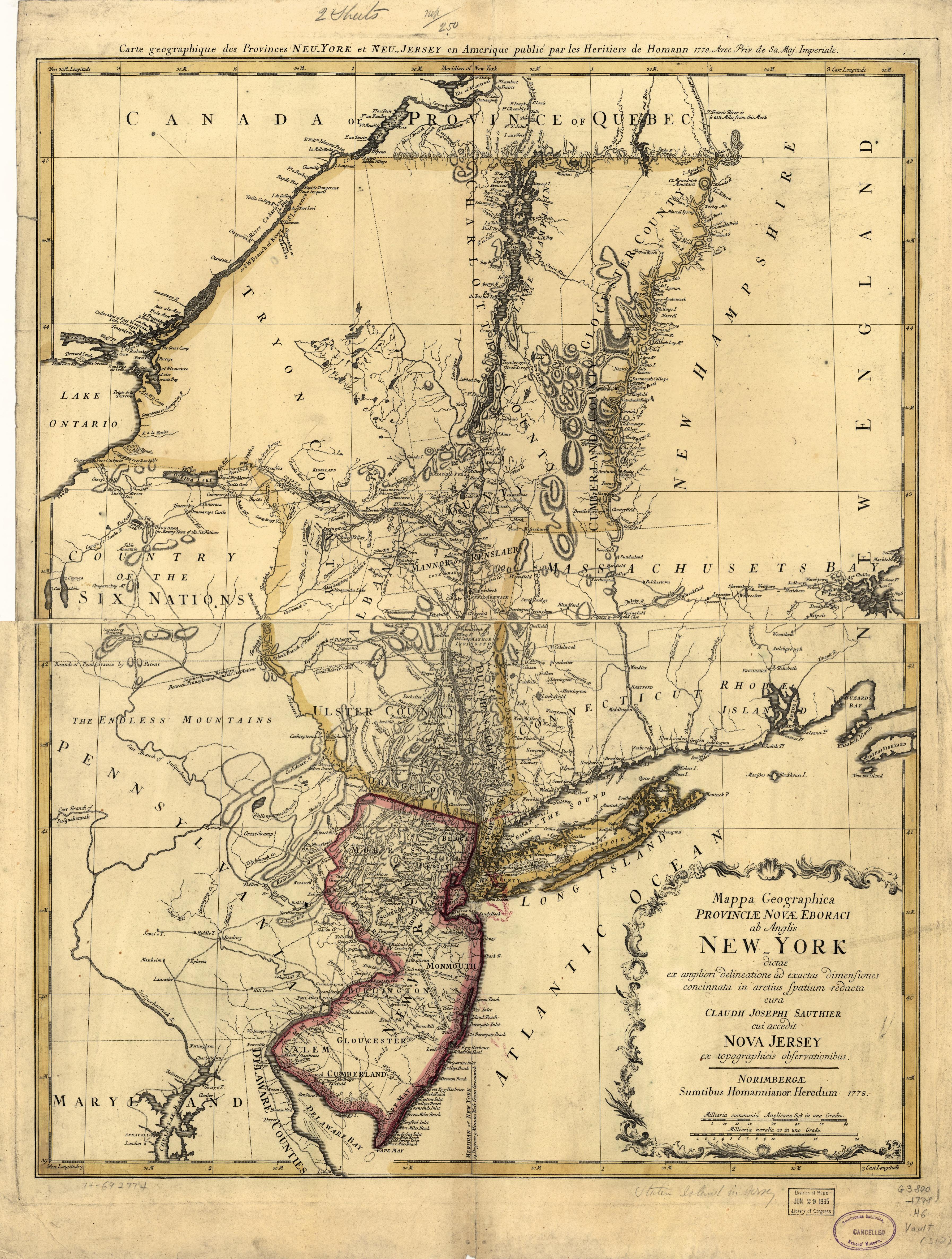
John M. McDonald interviewed roughly 400 people between 1844 and 1851 about their memories of the American Revolution in Westchester County and the adjacent Connecticut border. When the Westchester County Historical Society digitized and cataloged the surviving McDonald manuscripts in 2025, they extracted a Personal Name index from each interview. Running through those indexes, one name appears more often than any other: Bearmore, Mansfield, d. 1780. At least 25 of the ~109 McDonald interviews we have transcribed so far mention him. No other individual — not James DeLancey, not Samuel Kipp, not John André — comes close. If you want to know what Westchester County remembered about the Revolutionary War two generations later, the answer is: Bearmore.
Who was Mansfield Bearmore? The published Loyalist histories give us a thin outline: a major commanding a Refugee cavalry corps at Morrisania (Bolton and Scharf both treat him as a subordinate of Col. James DeLancey, though as we shall see in the Corsa section below, at least one knowledgeable McDonald witness directly contradicts the Bearmore-under-DeLancey framing and insists Bearmore commanded independently until his death), active in the Neutral Ground from at least 1778, captured by Continental cavalry in November 1779, and killed in action in late November 1780. That is almost everything Bolton 1848, Scharf 1886, and Shonnard 1900 preserve about him. They do not give us the date of his capture, the date of his death, the circumstances of either, a physical description, his relationship to his own officers, his reputation with the civilian population, or — strikingly — a single one of his own quoted sentences.
All of those things are in the McDonald manuscripts, distributed across dozens of interviews. This article is the first attempt we are aware of to gather them into a single portrait.
"A Vigilant and Good Officer"[1]
Samuel Washburn, an 87-year-old Mount Pleasant man interviewed by McDonald on November 6, 1849, offers the shortest and most generous assessment of Bearmore in the entire collection. Washburn had fled the Westchester Neutral Ground for Long Island in 1780 because his family was being plundered by both Skinners and Cowboys, and he had every reason to speak ill of the Loyalist officers who had terrorized his neighborhood. Instead, of Bearmore specifically, he said:[^1]
<em>"Burr was a vigilant and good officer."<sup class="fn-ref"><a href="#fn-1" id="fnref-1-ff0d95">[1]</a></sup></em><sup class="fn-ref"><a href="#fn-1" id="fnref-1-ff0d95">[1]</a></sup>[^1]: WCHS McDonald Interviews item 1865, Washburn Samuel interview of November 6, 1849. Hufeland Mss. Book 1, Vol. 6, p. 933. https://collections.westchestergov.com/digital/collection/mcdonald/id/1865 . Full transcription: [history.croton.news/mcdonald/mcdonald_washburn_samuel](https://history.croton.news/mcdonald/mcdonald_washburn_samuel).
Washburn's original manuscript writes "Burr" — the word as it appears on the page. WCHS archivist John English added a marginal note to the digital catalog record: "Burr is written in origl, but probably the writer meant Bearmore — J.E. see p. 16. origl." The mis-hearing is a consequence of the line break in the manuscript and the dialect pronunciation of "Bearmore" as the New York dialect would have rendered it — with a soft r that slurred easily into "Burr" when transcribed by McDonald or a copyist.
A Patriot witness calling a Loyalist cavalry officer "a vigilant and good officer"[1] with no qualifier is unusual. Washburn had no personal stake in rehabilitating Bearmore's memory; Washburn was himself exiled by Loyalist cavalry. The compliment is — at minimum — a professional one from one man who had lived through the Neutral Ground to another.
The Kipp Brothers on Bearmore's Character
Elizabeth Carpenter Field, interviewed in 1848 (WCHS item 895), gives perhaps the sharpest single characterization of Bearmore's selective mercy. Bearmore stopped at her family's house on King Street on July 11, 1779 — the day the British burned Bedford — and the Field family asked whether their house would be spared. Elizabeth's account:[^2]
<em>"Bearmore stopped at our house the day Bedford was burnt… He answered, 'No, you are aware they won't meddle with you this time.'"<sup class="fn-ref"><a href="#fn-2" id="fnref-2-695ad1">[2]</a></sup></em><sup class="fn-ref"><a href="#fn-2" id="fnref-2-695ad1">[2]</a></sup>[^2]: WCHS McDonald Interviews item 895, Carpenter Elizabeth Field interview of 1848. Hufeland Mss. Book 1. https://collections.westchestergov.com/digital/collection/mcdonald/id/895 . Full transcription: [history.croton.news/mcdonald/mcdonald_carpenter_elizabeth_field](https://history.croton.news/mcdonald/mcdonald_carpenter_elizabeth_field).
Carpenter Field follows this with an explicit assessment:
<em>"Bearmore was kind and protecting to those he was acquainted with, but bitter against the violent whigs."<sup class="fn-ref"><a href="#fn-3" id="fnref-3-608fc6">[3]</a></sup></em><sup class="fn-ref"><a href="#fn-3" id="fnref-3-608fc6">[3]</a></sup>This is the two-sided Bearmore of family memory: a major who rode at the head of the cavalry that burned Bedford on July 11, 1779, and who on the same day stopped at a neighbor's house to reassure them personally that they would not be molested. The Carpenter-Field family — King Street Loyalist sympathizers, known to Bearmore — were given a direct verbal guarantee <em>on the morning of the burning of Bedford</em>. The Bedford whig families, whose houses were burning as Bearmore spoke, received no such guarantee.
The Kipp Family's Direct Testimony
The Kipp brothers — Benjamin and Gilbert — whose joint 1847 interview is a central document of the Westchester Tea Party story (see Story 21, [The Tea Captain Was Not Elizabeth](/story/21_tea_captain)) — do not give Bearmore a character sketch, but they place him within the DeLancey Refugee officer corps alongside their own uncles Samuel and James Kipp. In the published Loyalist record, Bearmore is sometimes confused with the Kipps, sometimes treated as a separate senior officer. The Kipp brothers' testimony clarifies: Bearmore was senior to their uncles. He commanded the cavalry detachment on the raid that took 200 head of cattle from the Orser farm and its neighbors (Talman Orser's testimony, WCHS item 1020):
<em>"Bearmore commanded on this occasion."<sup class="fn-ref"><a href="#fn-4" id="fnref-4-b7c569">[4]</a></sup></em>[^3]
[^3]: WCHS McDonald Interviews item 1020, Orser Talman interview of October 17, 1850. Hufeland Mss. Book 1, Vol. 7, pp. 1020–1022. https://collections.westchestergov.com/digital/collection/mcdonald/id/1020 . Full transcription: [history.croton.news/mcdonald/mcdonald_orser_talman](https://history.croton.news/mcdonald/mcdonald_orser_talman).
Talman Orser, whose testimony is the primary source for the Westchester Tea Party myth correction, places Bearmore in direct command of the cattle raid that forced his family to abandon their Ossining home and move to Yorktown. The Kipps — Samuel and James — are named as sub-officers. Bearmore is the man in charge.
The Capture by Colonel Armand, November 1779
In November 1779, Bearmore was captured by an American cavalry force commanded by the French volunteer Colonel Charles Armand (Armand-Tuffin, Marquis de La Rouërie). The capture is recorded in Talman Orser's interview, with an unusual detail about how Armand personally handled his prisoner:[^3]
<em>"When Armand took Bearmore he secured him upon his own horse behind him, being unwilling to trust him with any other person."<sup class="fn-ref"><a href="#fn-4" id="fnref-4-b7c569">[4]</a></sup></em><sup class="fn-ref"><a href="#fn-4" id="fnref-4-b7c569">[4]</a></sup>Armand — a French nobleman, slightly eccentric, commanding his own cavalry "Legion" of mixed French and American soldiers quartered at Jacob Ryder's house in Ossining — literally placed Bearmore on the saddle behind his own horse for the ride back to American lines. He would not delegate the prisoner to anyone else. This is an unusual personal act of custody for a senior commander, and the most likely reading is that Armand feared that a subordinate might kill the prisoner out of revenge. Bearmore had personally commanded the cavalry raid that had taken 200 cattle and horses from the Whig families of Ossining; any American dragoon tasked with guarding him would have had immediate personal grievances. Armand kept the prisoner alive by riding home with him strapped to his own saddle.
Bearmore was subsequently exchanged, paroled, or rescued — the exact mechanism is not clear in our sources — and back in the field within months.
Erasmus Gill's Sword Challenge
Before his capture, and possibly as part of the American campaign to capture him, Bearmore was the target of a choreographed provocation by American Lieutenant Erasmus Gill. Merritt Brown's 1848 interview describes the plan:[^4]
<em>"When Lieutenant Gill challenged Major Bearmore to combat he offered to fight him singly or three against three, having two men with him picked from the regiment, and the three having the best horses of the regiment — he himself riding a horse that belonged to Colonel White — his main object was to draw Bearmore into an ambuscade."<sup class="fn-ref"><a href="#fn-5" id="fnref-5-d07ca8">[5]</a></sup></em><sup class="fn-ref"><a href="#fn-5" id="fnref-5-d07ca8">[5]</a></sup>[^4]: WCHS McDonald Interviews item 815, Brown Merritt interview of December 5, 1848. Hufeland Mss. Book 1. https://collections.westchestergov.com/digital/collection/mcdonald/id/815 . Full transcription: [history.croton.news/mcdonald/mcdonald_brown_merritt](https://history.croton.news/mcdonald/mcdonald_brown_merritt).
Gill's plan: offer Bearmore a formal single-combat challenge, or alternatively a three-on-three cavalry combat, with Gill riding the best horse in the American regiment (a borrowed mount from Colonel Anthony Walton White's own stable). The point of the offer was not honor. The point was to draw Bearmore out of his protected position into an ambush. Bearmore evidently either did not accept the challenge or did accept it cautiously enough to escape the ambush. Nehemiah Brown's independent 1848 interview preserves what actually happened when Gill finally crossed swords with Bearmore directly:[^5]
<em>"Gill leaped his horse over a fence to meet him half way and their swords actually crossed when several of Bearmore's men spurred on to their commander, and Gill, finding himself likely to have several antagonists withdrew. Bearmore was too much upon his guard to be drawn within the American lines."<sup class="fn-ref"><a href="#fn-6" id="fnref-6-24a1fb">[6]</a></sup></em><sup class="fn-ref"><a href="#fn-6" id="fnref-6-24a1fb">[6]</a></sup>[^5]: WCHS McDonald Interviews item 1508, Brown Nehemiah interview of October 28, 1844. Hufeland Mss. Book 1. https://collections.westchestergov.com/digital/collection/mcdonald/id/1508 . Full transcription: [history.croton.news/mcdonald/mcdonald_brown_nehemiah](https://history.croton.news/mcdonald/mcdonald_brown_nehemiah).
The actual sword-meeting of Gill and Bearmore: Gill leaps a fence, their blades cross once, Bearmore's own cavalrymen rush to their major's defense, Gill pulls away without completing the engagement. Bearmore — in the phrase of Brown's interview — "was too much upon his guard to be drawn within the American lines."[6] He was a disciplined cavalry officer who could be personally challenged but not tricked.
The Gill affair is a specific named sword-to-sword encounter between an American and Loyalist officer that no published history of the Westchester Revolutionary War preserves in this detail. Erasmus Gill — a Continental Army dragoon officer — and Mansfield Bearmore — a DeLancey's Refugees major — physically crossed swords at a fence one afternoon in 1779 or 1780, and then disengaged.
The Mortal Wound at Twitching's Corner, November 1780
In November 1780, Bearmore led a Refugee column — about 600 strong, per Hobby's first-person count — on a march north from Morrisania, intending to attack the American guard at Pines Bridge. Intelligence during the march informed him that the American force at Pines Bridge had been reinforced, and the column turned back toward Twitching's Corner — a four-corners intersection in what is now Mount Pleasant, where the White Plains/Pines Bridge road crossed the Bedford/Tarrytown road, near the poorhouse.[^6] The intersection is now under the interchange of Bradhurst Avenue and the Sprain Brook Parkway.
[^6]: WCHS McDonald Interviews item 1363, Hobby Enos interview of November 5, 1849. Hufeland Mss. Book 1, Vol. 5, pp. 1354–1362. https://collections.westchestergov.com/digital/collection/mcdonald/id/1363 . Full transcription: [history.croton.news/mcdonald/mcdonald_hobby_enos](https://history.croton.news/mcdonald/mcdonald_hobby_enos).
Enos Hobby (1761–1857), age 89 at the time of the interview, was on the march with Bearmore that night and gives us the fullest eyewitness account of the engagement. Hobby opens with a character sketch that is worth reading as a whole, because it is the shape of the two-sided Bearmore that no published history preserves:
<em>"Bearmore, I think when I knew him was about 25 or 30, and a very good and bold officer, but severe towards prisoners. In November 1780, we started from Headquarters at Morris's house (afterwards burnt) about 600 strong, under Major Bearmore. Huggeford, too, I think was along."<sup class="fn-ref"><a href="#fn-7" id="fnref-7-452ee2">[7]</a></sup></em><sup class="fn-ref"><a href="#fn-7" id="fnref-7-452ee2">[7]</a></sup>Three things in that single sentence are new to the published record. Bearmore was 25 or 30 when Hobby served under him — so roughly born between 1750 and 1755, putting him in his late twenties at his death. He was <em>"severe towards prisoners"</em> — the qualification Hobby offers against his own otherwise generous assessment. And <strong>Huggeford was along on the Twitching's Corner march</strong> — a direct link to the enslaved-Black-executioner / Tim Knapp / Quaker-convert figure whose story is told in [Story 26, <em>"The Handsomest Young Man I Ever Saw"<sup class="fn-ref"><a href="#fn-8" id="fnref-8-da8f00">[8]</a></sup></em>](/story/26_tim_knapp). The Tim Knapp execution and Bearmore's death march are, through Huggeford, a single connected Loyalist-Neutral-Ground history.
Hobby continues with the operational sequence:
<em>"We moved first up the North River road with the intention of surprising the guard at Pines Bridge; but when within three or four miles of the Croton information came that the rebels there had been strongly reinforced. We also heard that there was a strong patrol below which we hoped to fall in with. We then turned back, moving in regular order, about half our horse in front. Where Twitching's now is, we fell in with a scout that hailed us with great spirit: 'Who's there?' 'Friends!' 'Friends to whom?' 'King George!' We then received a volley which threw us into some disorder."</em>
The exchange — "Who's there?" "Friends!" "Friends to whom?" "King George!" — is a literal line of dialogue between an American picket and a Loyalist cavalry officer in the pre-dawn darkness of a November 1780 night. The American sentry was challenging; the Loyalist officer on the opposite side gave the wrong answer; the Americans fired a volley. Hobby continues:
<em>"The American scouts was posted at the time they fired on the south east corner of the roads which cross at Twitchings and kept up their fire with great spirit for a quarter of an hour. The night was pitch dark and we couldn't see their number. Bearmore ordered his men to charge, but the bank was high with a fence on the top which the horses couldn't surmount and with trees and bushes. At this moment Bearmore received his mortal wound after an unsuccessful attempt to charge. 'Boys,' said he, 'I'm wounded — but don't mind that — Charge the rebels, and drive them from their cover.'"</em>
Mansfield Bearmore's dying words — "Boys, I'm wounded — but don't mind that — Charge the rebels, and drive them from their cover"[7] — are preserved in Hobby's interview. The ambush succeeded for a specific topographic reason: the American scouts were posted on ground with a high bank and a fence along the top that cavalry horses could not jump. Bearmore ordered the charge anyway and was shot trying to execute an order that the terrain made impossible. A 600-man Loyalist column riding back from a failed attack on Pines Bridge hit a sentry post at a road junction and could not clear the fence to counter-charge. That is the precise mechanism.
Hobby closes the scene with the only physical description of Bearmore in any source: "Bearmore died a few weeks afterwards. He was a fine looking officer."[9] The column retreated without taking prisoners, many of its horsemen so exhausted that each was ordered either to put a tired footman behind the saddle or dismount and give the footman his horse. Bearmore himself was carried to Morrisania and died there, of his wound, within weeks of the Twitching's Corner engagement.
Corsa's Contradiction: Bearmore Before DeLancey
One of our primary witnesses reframes Bearmore's entire command position. Andrew Corsa of Fordham, eighty-seven years old, interviewed by McDonald in 1848 (WCHS item 1433), served as an American guide multiple times through the war and knew both the DeLancey and Bearmore operations at first hand. His opening sentences flatly contradict the published Loyalist histories:[^6a]
[^6a]: WCHS McDonald Interviews item 1433, Corsa Andrew interview of 1848. Hufeland Mss. Book 1. https://collections.westchestergov.com/digital/collection/mcdonald/id/1433 . Full transcription: [history.croton.news/mcdonald/mcdonald_corsa_andrew](https://history.croton.news/mcdonald/mcdonald_corsa_andrew).
<em>"DeLancey and Bearmore's troops were under British pay. Bearmore was not Major under DeLancey. DeLancey did not come forward as Commander until after Bearmore's death."<sup class="fn-ref"><a href="#fn-10" id="fnref-10-6dd962">[10]</a></sup></em><sup class="fn-ref"><a href="#fn-10" id="fnref-10-6dd962">[10]</a></sup>This is a genuinely important correction to the lineage of the Morrisania Refugee corps as it has come down in the published record. Bolton, Scharf, and Shonnard all treat Bearmore as a subordinate major under Col. James DeLancey; Corsa says they were <strong>parallel officers under the same British pay system</strong> until Bearmore's November 1780 death, and that <strong>DeLancey only assumed top command afterward</strong>. Corsa's direct knowledge — he was interrogated by both DeLancey and Emmerich during the war and was an American guide at Fordham — makes him an unusually well-placed source on the Loyalist command structure at Morrisania.
The implication for the Pines Bridge story is substantial. If DeLancey did not take command of the Refugee corps until after Bearmore's death in late 1780, then the May 14, 1781 attack on Colonel Christopher Greene at the Davenport House (see [Story 22](/story/22_pines_bridge)) was led by a DeLancey who had been Colonel-Commandant for about six months at that point — long enough to plan the operation but fresh enough in the role that his cavalry detachment under Captain Carpenter and Captain Totten was still running the same unit and routes that Bearmore had used. The attempted attack on Pines Bridge that killed Bearmore in November 1780 and the successful attack on Pines Bridge that killed Greene in May 1781 become, on Corsa's reading, essentially the same operation carried out by the same cavalry corps under two successive commanders.
Thomas Currie Jr.: A Ninth Character Witness
A very short character statement from Thomas Currie Jr. — interviewed on the same day as Madame Bearmore, October 21, 1847 — gives us the ninth independent Patriot-side compliment of Bearmore in the collection:[^6b]
[^6b]: WCHS McDonald Interviews item 659 (joint page with Madame Bearmore), Currie Thomas Jr. interview of October 21, 1847. Hufeland Mss. Book 1.
<em>"I have always heard Major Mansfield Barmore well spoken of as a good and gallant officer, and as a person that was much dreaded by the whigs in the Revolutionary war."<sup class="fn-ref"><a href="#fn-11" id="fnref-11-831ae8">[11]</a></sup></em><sup class="fn-ref"><a href="#fn-11" id="fnref-11-831ae8">[11]</a></sup>Currie's testimony is important precisely because it is short and second-hand. He is not reporting first-person experience with Bearmore — he is reporting the <em>reputation</em> of Bearmore as it still circulated in Westchester County 67 years after his death. If the published histories give Bearmore only a one-line military biography, the oral tradition preserved by McDonald gives him three separate kinds of compliment — from Patriot veterans (Washburn), from Loyalist-sympathetic families (Carpenter Field), and from the general neighborhood reputation (Currie) — that collectively describe a commander his enemies respected more than they were willing to admit in print.
The Family Loses the Memory
One of the strangest pieces of Bearmore testimony in the McDonald collection is the interview with Madame Bearmore, a cousin of Mansfield Bearmore interviewed on October 21, 1847 (WCHS item 659), sixty-seven years after his death:[^7]
<em>"My father was a cousin of Major Bearmore. My mother is now very far gone in dotage, and has almost lost her memory. She always represented Major Bearmore as a very bold officer and good man. The upper party in the Revolution stood in great awe of him. The family of Caleb Williams living at Annsville were related to Major Bearmore, and must have many particulars of him."<sup class="fn-ref"><a href="#fn-11" id="fnref-11-831ae8">[11]</a></sup></em><sup class="fn-ref"><a href="#fn-11" id="fnref-11-831ae8">[11]</a></sup>[^7]: WCHS McDonald Interviews item 659, Madame Bearmore interview of October 21, 1847. Hufeland Mss. Book 1. Full transcription: [history.croton.news/mcdonald/mcdonald_bearmore_madame](https://history.croton.news/mcdonald/mcdonald_bearmore_madame).
Madame Bearmore's direct testimony is limited — she is telling McDonald what her mother, who had memory loss, had always said about their cousin: that he was "a very bold officer and good man"[11] and that "the upper party in the Revolution stood in great awe of him."[11] The generosity of Washburn's "vigilant and good officer" is repeated from inside the Bearmore family itself. But the family had already lost the specifics — her aging mother's half-remembered phrases, a pointer to distant Caleb Williams relatives who might still have "many particulars" — by 1847. The hoped-for Caleb Williams source was never interviewed.
The more striking family-memory interview is Gilbert Bearmore, a different relative interviewed on October 21, 1850:[^8]
<em>"I don't know where Major Mansfield Bearmore was born or where his mother was from, or what his mother's maiden name was."<sup class="fn-ref"><a href="#fn-12" id="fnref-12-84adb5">[12]</a></sup></em><sup class="fn-ref"><a href="#fn-12" id="fnref-12-84adb5">[12]</a></sup>[^8]: WCHS McDonald Interviews item (Gilbert Bearmore), interview of October 21, 1850. Full transcription: [history.croton.news/mcdonald/mcdonald_bearmore_gilbert](https://history.croton.news/mcdonald/mcdonald_bearmore_gilbert).
By 1850, the immediate Bearmore family had already lost the basic genealogical facts about their own Revolutionary kinsman. Gilbert Bearmore does not know where his own cousin was born. He does not know the maiden name of Mansfield Bearmore's mother — i.e., the name of his own great-aunt. Seventy years after the Revolution, the family that could have preserved the most basic details about Mansfield Bearmore no longer had them. Whatever Washburn and Carpenter Field preserved from the Patriot side — "vigilant and good officer," "kind and protecting to those he was acquainted with,"[3] the cattle raid on the Orsers, the capture by Armand, the sword-crossing with Gill, the mortal wound at Twitching's Corner — is all the Bearmore record we now have. The family's own memory was already thinner than McDonald's outside witnesses.
New Witnesses (April 2026 Transcriptions)
Four additional interviews from the April 2026 McDonald transcription batch add material that had not yet appeared in the record above: a full physical description of Bearmore, living-family testimony about the cause of his death, a previously unrecorded ambush attempt, and a new named participant in his 1779 capture.
Frederick Valentine on Bearmore's Origins and Appearance (WCHS item 588)
The fullest physical description of Bearmore in the entire McDonald collection comes not from a soldier who rode with him but from Frederick Valentine (WCHS item 588), who supplies both his parentage and his appearance in a single passage:
<em>"The maiden name of Bearmore's mother was Kirkpatrick, an old West Chester family in reduced circumstances, and he was born on the Neck. He was a brave, humane, popular man, but couldn't keep his men from plundering, and was in consequence much blamed. In person, he was straight, tall, fair complexioned and handsome."</em>[^11]
[^11]: WCHS McDonald Interviews item 588, Valentine Frederick interview (date not yet transcribed). April 2026 transcription batch. Hufeland Mss. Full transcription forthcoming at history.croton.news/mcdonald.
This is the first source to name Bearmore's mother's maiden name — Kirkpatrick, an old Westchester family described as being in reduced circumstances by the time of Bearmore's birth. The birthplace "on the Neck" almost certainly refers to Pelham Neck (now Pelham), a peninsula on the Long Island Sound shore of lower Westchester. The physical portrait — "straight, tall, fair complexioned and handsome" — gives texture to Hobby's brief "fine looking officer" and resolves, in combination with Gilbert Bearmore's admitted ignorance of his cousin's mother's name, the genealogical gap that the family itself had lost by 1850.
Valentine also confirms a detail about Bearmore's death that the earlier sources leave vague: "After he received his mortal wound he was taken to New York and died in Roosevelt St." Prior sources place his death at Morrisania; Valentine specifies that he was transported further south to New York City itself, and died on Roosevelt Street — a street that ran along the lower East Side waterfront in the eighteenth century, commonly used for military hospitals and convalescent quarters. This is the most precise statement of Bearmore's place of death in any McDonald interview.
Valentine also notes: "Captn. Corse was under DeLancey" — a detail linking the Corsa family to DeLancey's corps and reinforcing the command-structure discussion in the Corsa's Contradiction section above. If Captain Corse served under DeLancey while Bearmore commanded separately, the Corse/Corsa family's chain of command ran through DeLancey rather than Bearmore.
Zabud June on Living Family Memory (WCHS item 999)
Zabud June (WCHS item 999) contributes two things not found elsewhere: a vivid expression of how the enemy experienced Bearmore, and living testimony from old Mrs. Bearmore herself about the medical cause of his death.
On how Bearmore was regarded by his opponents:
<em>"They called him 'That old bitch Gearmore,' and feared him as though he were a tiger."</em>[^12]
[^12]: WCHS McDonald Interviews item 999, June Zabud interview (date not yet transcribed). April 2026 transcription batch. Hufeland Mss. Full transcription forthcoming at history.croton.news/mcdonald.
The epithet — "That old bitch Gearmore" — is the most hostile thing anyone in the McDonald collection says about Bearmore directly, and it comes with an immediate qualifier: "feared him as though he were a tiger." Contempt and terror coexist in the same sentence, exactly as they do in the Carpenter Field formulation ("kind and protecting to those he was acquainted with, but bitter against the violent whigs"[3]). The variant spelling "Gearmore" — like the "Burr" variant in Washburn's interview — reflects the New York dialect rendering of a surname that was apparently pronounced with an initial soft-G or aspirated sound.
June's interview also preserves what old Mrs. Bearmore (still living at the time of the interview) said about the mortal wound: "he would have got well of the wound he received but for the imprudence of getting wet in some river when in a fair way of recovery." This is living family testimony preserved nowhere else. The wound itself did not kill him immediately; he was recovering — "in a fair way of recovery" — when exposure to water during a river crossing reopened or infected the wound. Combined with Valentine's specification that he died on Roosevelt Street in New York City, the sequence becomes clearer: wounded at Twitching's Corner in November 1780, transported to New York, initially recovering, then set back fatally by a subsequent wetting — whether during transport, a river crossing, or a hospital incident is not stated.
Merritt Brown on the King Street Ambush Attempt (WCHS item 302)
The article above draws on Merritt Brown's WCHS item 815 interview for the strategic logic of Gill's sword challenge. The April 2026 batch includes a separate Merritt Brown interview, WCHS item 302, which records a distinct and previously unrecorded episode: an earlier attempt to decoy Bearmore into an ambush in or near King Street:
<em>"Lieut. Gill, of Moylan's, tried to decoy Bearmore into an ambush in or near King Street... He advanced close to Bearmore, and, when pursued, retreated with ease... challenged Bearmore to single combat — offered to meet him three against three... but Bearmore was on his guard, and would not advance beyond a single certain point."</em>[^13]
[^13]: WCHS McDonald Interviews item 302, Brown Merritt interview (date not yet transcribed). April 2026 transcription batch. Hufeland Mss. Full transcription forthcoming at history.croton.news/mcdonald. (Distinct from item 815, the previously transcribed Merritt Brown interview on the same events.)
This item 302 account places the decoy operation explicitly at King Street — the road that ran through the heart of the Neutral Ground from Rye to White Plains, the same road where the Carpenter-Field house stood. The tactical sequence is clearer here than in items 815 and 1508: Gill advanced close to Bearmore, was pursued, retreated easily (presumably on the superior horse from Colonel White's stable), and then issued the formal challenge. Bearmore would not advance beyond a "single certain point" — a fixed perimeter marker he refused to cross, which is exactly the defensive intelligence that prevented the ambush from succeeding. Brown's two interviews together — items 302 and 815 — establish that Gill's entire decoy operation was a multi-stage campaign: the King Street advance and retreat (item 302), the formal challenge and sword crossing (item 815 and WCHS 1508), and the final disengagement when Bearmore's own men intervened.
Daniel Odell on the 1779 Capture (WCHS item 392)
The Capture by Colonel Armand section above draws on Talman Orser's account (WCHS 1020). Daniel Odell (WCHS item 392) now adds a named participant not previously recorded:
<em>"Colonel John Odell was with Armand when he took Bearmore and Frederick Underhill."</em>[^14]
[^14]: WCHS McDonald Interviews item 392, Odell Daniel interview (date not yet transcribed). April 2026 transcription batch. Hufeland Mss. Full transcription forthcoming at history.croton.news/mcdonald.
This is the first source to name Colonel John Odell as a participant in the November 1779 capture. Armand's mixed-nationality Legion is documented in Continental Army records, but the specific personnel present when Bearmore was taken are not named in any source previously transcribed. John Odell — apparently a relation of the interviewer Daniel Odell — was present when Armand took both Bearmore and Frederick Underhill simultaneously. The joint capture of Bearmore and Underhill in a single operation is also new: no prior McDonald interview explicitly paired the two names as simultaneous prisoners. Underhill was a prominent Loyalist family name in lower Westchester; which Frederick Underhill was taken with Bearmore, and what became of him, is an open research question.
What the Published Record Missed
Read together, the ~25 McDonald interviews that mention Bearmore create a portrait that Bolton, Scharf, and Shonnard never had:
- Physical and operational: senior to Samuel and James Kipp, commanded the cavalry that took 200+ cattle from the Ossining/Orser neighborhood, present at the July 11, 1779 burning of Bedford, captured by Col. Charles Armand in November 1779 and personally escorted back to American lines by Armand himself on his own saddle. (Orser, WCHS 1020; Carpenter Field, WCHS 895.) - Character (both sides): "A vigilant and good officer"[1] (Washburn, WCHS 1865); "kind and protecting to those he was acquainted with, but bitter against the violent whigs"[3] (Carpenter Field, WCHS 895); disciplined enough to refuse a sword challenge from Lt. Erasmus Gill that was designed to lure him into an ambush (Merritt Brown, WCHS 815); crossed swords with Gill at a fence when Gill leapt the rail, then disengaged when Bearmore's own men rushed to defend him (Nehemiah Brown, WCHS 1508). - The mortal wound: shot at the southeast corner of Twitching's Corner on a pitch-dark November 1780 night, during an attempted preemptive attack on the Pines Bridge garrison, after an exchange of challenge words — "Who's there?" "Friends!" "Friends to whom?" "King George!" — that failed. Bearmore's own last order: "Boys, I'm wounded — but don't mind that — Charge!" (Enos Hobby, WCHS 1363.) - The family afterward: By 1850, Mansfield Bearmore's direct relatives did not know where he was born or what his mother's maiden name was. The Westchester Patriot community — through Washburn, Carpenter Field, and the various witnesses — remembered him more clearly than his own family did. (Madame Bearmore, Gilbert Bearmore.)
Coda
Mansfield Bearmore was the commanding cavalry officer most of the Whig families of northern Westchester actively feared during the war. He was also the officer they most consistently conceded, in 1847–1850, had been "vigilant and good" and "a fine looking officer." He personally guaranteed the safety of one Loyalist-sympathetic family on the morning of the Bedford burning. He was too disciplined to be drawn into Lieutenant Erasmus Gill's ambush. He died ordering a charge in the pitch dark that his own horsemen could not execute because the American scouts were posted on ground with a fence-topped bank. The 600-man cavalry column he commanded broke off the attack after he was hit; no Pines Bridge garrison was attacked that November 1780 night. Huggeford — also along on that march, per Hobby — would survive Twitching's Corner, continue at Morrisania under DeLancey after Corsa's re-dating of the command succession, and end his own life decades later as a Quaker convert grieving, on his deathbed, the things he had done in the war (see [Story 26](/story/26_tim_knapp)).
Seven months later the same Pines Bridge garrison — Colonel Christopher Greene's Rhode Island Regiment at Davenport House — would be destroyed by a different Loyalist cavalry force under Col. James DeLancey. Mansfield Bearmore had tried the attack first and died in the preparation. His name has been carried forward by at least twenty-five independent witnesses in the McDonald collection because his enemies remembered him clearly, his own men remembered his dying words, and his own family had already forgotten where he came from.
The Twitching's Corner intersection where he was shot is now under the interchange of Bradhurst Avenue and the Sprain Brook Parkway. No marker commemorates the engagement. The "south east corner of the roads which cross at Twitchings" is, for most purposes, lost. It exists only in the pages of a notebook a Hudson Valley chronicler wrote in 1849 from the mouth of an 88-year-old man who had been a private in Bearmore's own unit and who had heard him say "Boys, I'm wounded — but don't mind that — Charge!"[7] in the dark.
References
- mcdonald_interview_samuel_washburn_1865 ↩
- mcdonald_interview_carpenter_elizabeth_field_895 ↩
- mcdonald_interview_carpenter_elizabeth_field_895 ↩
- mcdonald_interview_talman_orser_1020 ↩
- mcdonald_interview_brown_merritt_815 ↩
- mcdonald_interview_brown_nehemiah_1508 ↩
- mcdonald_interview_hobby_enos_1363 ↩
- mcdonald_interview_ferris_mary_ann_1146 ↩
- mcdonald_interview_hobby_enos_1363 ↩
- mcdonald_interview_corsa_andrew_1433 ↩
- mcdonald_interview_madame_bearmore_659 ↩
- mcdonald_interview_gilbert_bearmore_1052 ↩
Sources Consulted
- Hobby, Enos — WCHS McDonald Interviews item 1363, interview 1849-11-05. The only eyewitness account of Bearmore's mortal wounding; served as a private in Bearmore's own unit. [Transcription](https://history.croton.news/mcdonald/mcdonald_hobby_enos).
- Orser, Talman — WCHS McDonald Interviews item 1020, interview 1850-10-17. Places Bearmore in command of the cattle raid that forced the Orser family to leave Ossining, and describes Armand's personal custody of Bearmore after the 1779 capture. [Transcription](https://history.croton.news/mcdonald/mcdonald_orser_talman).
- Washburn, Samuel — WCHS McDonald Interviews item 1865, interview 1849-11-06. The "vigilant and good officer" line; the "Burr/Bearmore" marginal correction by John English. [Transcription](https://history.croton.news/mcdonald/mcdonald_washburn_samuel).
- Carpenter, Elizabeth Field — WCHS McDonald Interviews item 895, interview 1848. Places Bearmore at the Field house on July 11, 1779 — the day of the Bedford burning. [Transcription](https://history.croton.news/mcdonald/mcdonald_carpenter_elizabeth_field).
- Brown, Nehemiah — WCHS McDonald Interviews item 1508, interview 1844-10-28. The sword-crossing with Lt. Erasmus Gill at a fence. [Transcription](https://history.croton.news/mcdonald/mcdonald_brown_nehemiah).
- Brown, Merritt — WCHS McDonald Interviews item 815, interview 1848-12-05. The strategic logic of Gill's challenge: a designed ambush. [Transcription](https://history.croton.news/mcdonald/mcdonald_brown_merritt).
- Bearmore, "Madame" — WCHS McDonald Interviews item 659, interview of October 21, 1847 (NOT 1850 — that is the Gilbert Bearmore interview, a separate item). [Transcription](https://history.croton.news/mcdonald/mcdonald_bearmore_madame).
- Bearmore, Gilbert — family-memory interview, October 21, 1850. Records that the Bearmore family had already lost Mansfield's basic biographical facts by 1850. [Transcription](https://history.croton.news/mcdonald/mcdonald_bearmore_gilbert).
- Currie, Thomas Jr. — WCHS McDonald Interviews item 659 (joint page), interview of October 21, 1847. A one-sentence neighborhood reputation statement: "I have always heard Major Mansfield Barmore well spoken of as a good and gallant officer, and as a person that was much dreaded by the whigs." [source]
- Corsa, Andrew — WCHS McDonald Interviews item 1433, interview of 1848. The critical source for Bearmore's command independence: "Bearmore was not Major under DeLancey. DeLancey did not come forward as Commander until after Bearmore's death." [source] Corsa served as an American guide at Fordham and had direct knowledge of both the Bearmore and DeLancey commands at Morrisania. [Transcription](https://history.croton.news/mcdonald/mcdonald_corsa_andrew).
- Valentine, Frederick — WCHS McDonald Interviews item 588 (April 2026 transcription batch). The fullest physical description of Bearmore: "straight, tall, fair complexioned and handsome." Names his mother's maiden name as Kirkpatrick, places his birth "on the Neck," and specifies that he died on Roosevelt Street in New York City. Also links Captain Corse to DeLancey's corps. Transcription forthcoming.
- June, Zabud — WCHS McDonald Interviews item 999 (April 2026 transcription batch). Reports the epithet "That old bitch Gearmore" and preserves living testimony from old Mrs. Bearmore that Bearmore was recovering from his wound until "the imprudence of getting wet in some river" set him back fatally. Transcription forthcoming.
- Brown, Merritt — WCHS McDonald Interviews item 302 (April 2026 transcription batch). A distinct interview from item 815; records the King Street decoy operation in which Gill advanced on Bearmore, retreated when pursued, then issued the formal challenge. Bearmore "would not advance beyond a single certain point." Transcription forthcoming.
- Odell, Daniel — WCHS McDonald Interviews item 392 (April 2026 transcription batch). Names Colonel John Odell as present when Armand captured both Bearmore and Frederick Underhill simultaneously in November 1779. Transcription forthcoming.
All direct quotes are verbatim from the cited sources. Each factual claim was verified against the Croton Historical Archive database.